Understand the question the inspection was hired to answer
The CFPB home-inspection guidance recommends an independent assessment of physical condition and allows time for additional inspections. A general home inspection and a focused electrical investigation may involve different methods and access. Read the actual inspection agreement and report rather than assuming a universal service. If concealed-wiring identification is essential to the purchase, ask in advance whether it is included and what specialist work may be needed. This is especially useful in a house with several renovation eras, where visible improvements do not describe every hidden continuation.
Access changes what can be observed
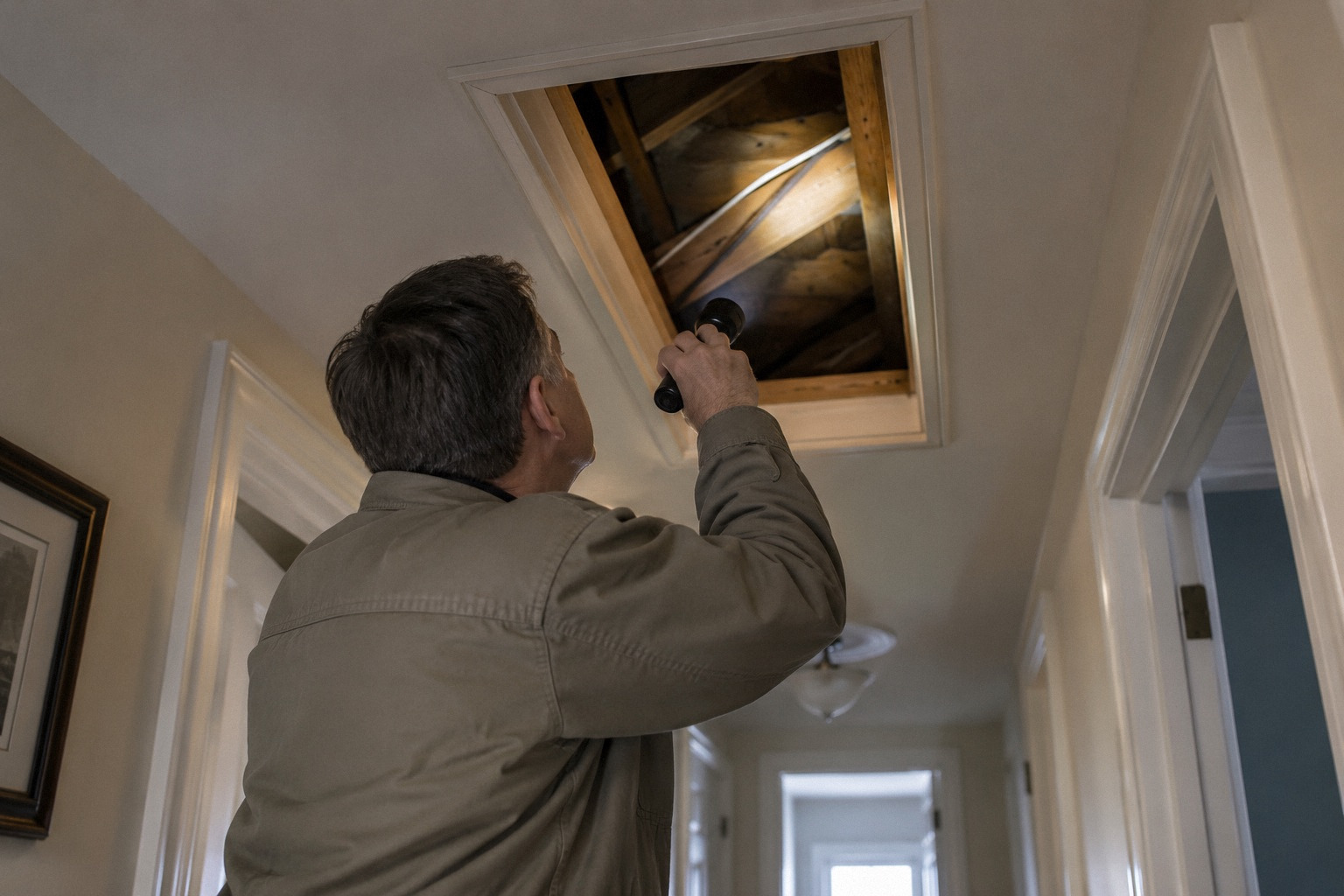
An inspector may be unable to enter parts of an attic, inspect behind stored items or see conductors concealed by finished surfaces. Those limitations should be read as meaningful information. They are neither proof of a defect nor evidence that the hidden area is clear. Ask whether additional access can reasonably be arranged and who must authorize it. Do not create openings or disturb insulation yourself during a showing. A buyer’s next step may be a targeted electrical assessment, especially when visible old supports, ungrounded devices or incomplete records leave a material question.
Read qualified language carefully
No active knob-and-tube observed is different from all legacy wiring professionally decommissioned and verified within a defined scope. Similarly, panel appears updated does not establish a branch-circuit rewire. Look for the nouns, locations and limitations in the report. If wording is unclear, request an explanation from its author while the inspection is fresh. A short written clarification can prevent a reassuring summary from being repeated more broadly by agents or buyers. Preserve the original report and any clarification together so the scope is not lost during later negotiations.
Know when a specialist adds useful information
The NFPA 73 overview describes an inspection framework specifically for existing dwelling electrical systems. It does not make every home inspection identical to that service. The HUD rehabilitation guide also shows why wiring method and condition require detailed attention. Ask an electrical specialist to address the unanswered decision, such as active status in a proposed insulation area or the extent of retained circuits. A narrowly scoped visit can be appropriate, but its findings should not become a whole-house clearance unless the work supports that conclusion.
Evaluate a later discovery without jumping to liability
If older wiring is found after purchase, retain the new assessment and compare it with what the earlier report actually said. A condition might have been concealed, inaccessible, misidentified or outside the agreed scope. Whether an inspector or seller bears legal responsibility depends on more than the fact of discovery. Obtain qualified advice if needed, while addressing the electrical condition. For future inspections, the lesson is to ask explicit questions about access and uncertainty rather than seek an impossible guarantee that no hidden issue exists anywhere in an old building.
Ask what a further inspection will add
Before commissioning another visit, identify the missing decision: wiring type, active status, extent or a particular defect. A second general walkthrough may repeat the same access limitations without resolving it. Ask the proposed specialist what access and assessment are needed, what report will result and which uncertainty may remain. This makes the additional service purposeful. It also prevents a buyer from collecting several reassuring opinions while the one important concealed area stays outside every person’s scope.
A practical example
Hypothetical example: A home inspection notes a newer panel and limited attic access because stored belongings block the entry. The buyer reads the summary as confirmation that the electrical system is modern. Later, an electrician finds active older lighting wiring in the previously inaccessible area. The original limitation is now central to understanding what was and was not assessed. Before closing, a better follow-up would have been to request access and a focused electrical review while contractual options remained. After closing, the owner should document the finding and obtain advice about the actual facts, rather than assume the panel note promised a complete hidden-wiring investigation. The same distinction helps sellers understand why a buyer requests another visit.
Questions to resolve before deciding
- Read the inspection agreement as well as the summary page.
- List inaccessible electrical areas and unanswered questions.
- Request clarification of phrases such as not observed or appears updated.
- Arrange a focused specialist assessment when a material decision remains unresolved.
- Preserve later findings and original limitations before evaluating responsibility.
Frequently asked questions
Is a mortgage appraisal an electrical inspection?
No. The CFPB distinguishes an appraisal from a home inspection. A lender’s valuation or property decision does not replace an independent assessment of the electrical condition. Ask what additional investigation is needed for the specific concern.
Can a specialist guarantee every hidden wire is modern?
Any conclusion should match the assessment actually performed and its access limitations. Ask what evidence supports the statement and what remains uncertain. A qualified report can be valuable without making an unlimited guarantee about concealed areas.
Sources and further reading
- Schedule a home inspection
- NFPA 73: Electrical Inspections for Existing Dwellings
- Residential Rehabilitation Inspection Guide, electrical chapter
Questions from homeowners
These discussions helped identify the problem. Reddit experiences are anecdotal; technical and legal statements rely on the sources above.