Start with the information residents need
A homeowner rarely needs a minute-by-minute labor account to organize the day. The practical questions are which rooms must be clear, when power may be unavailable, whether access routes change and what condition the house will be left in. Give the contractor a list of fixed household constraints, such as a resident's work call, a school pickup or a mobility requirement, while recognizing that technical work cannot always be scheduled around every preference.
Agree what is a forecast and what is confirmed. A planned outage window can change after a discovery or an inspection delay. The update should say so rather than creating false certainty. If a room cannot be returned to use, the household needs that information early enough to arrange a different sleeping or working location.
Choose a small set of communication channels
Use one channel for routine updates and one clearly identified method for urgent contact. A shared email thread or project message can work if both parties actually monitor it. Avoid splitting decisions among text messages to several crew members, hallway conversations and comments to a salesperson who is no longer involved. Ask how the crew lead will receive the decisions that affect installation.
California's CSLB contract guidance supports clear written agreements and changes. What is a Contract? For daily management, a brief record is often enough: date, issue, requested decision, responsible person and status. The record should distinguish a question from an approval. An owner saying that an extra light might be useful is not the same as authorizing its cost and effect on the schedule.
Use a decision log that closes questions
Number significant decisions and keep the unresolved ones visible. For each entry, state the available choices and the latest date an answer is needed to avoid delay. When a choice is made, record the approved scope and any linked change order. If a decision is deferred, write down what work can continue and what remains blocked. This reduces repeated conversations and prevents a forgotten request from reappearing as a late surprise.
CSLB's binding-agreement guidance discusses documenting changes to work, materials and dates. What should I look for in a contract and binding agreements? The log is a management aid alongside the formal contract process, not a replacement for required signatures or notices. Make sure approved changes are incorporated into the current documents rather than leaving the log as an unofficial parallel version of the job.
Communicate work-zone boundaries clearly
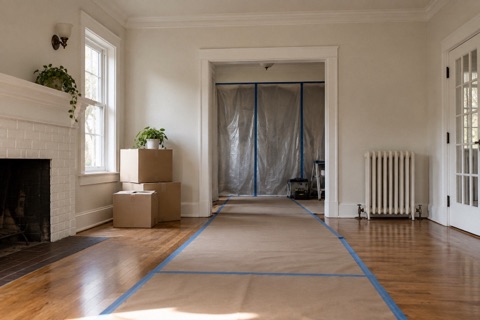
A room can look tidy and still be unavailable for household use. Ask the contractor to identify restricted areas and the person who can release them. In covered lead renovation work, EPA describes the work area through the containment established by the certified renovator. What is the work area? That boundary should be explained to residents, visitors and any other trade entering the house.
Use room names and visible reference points. Upstairs is too broad if one bedroom is usable and the landing is not. Agree how doors, barriers or notices will communicate restrictions, especially where children or pets could enter. Do not have the homeowner move protective barriers simply to make a passage more convenient; ask the responsible contractor to review the access problem.
Hypothetical daily update
A useful update for an occupied two-story house might say that the crew expects to work in the rear bedroom and landing tomorrow, that furniture must be moved from two named walls before arrival and that an outage affecting the office is planned during a stated window. It should also identify whether the timing is confirmed and whom to call if the household has a conflicting essential need.
The same update can include six short fields:
- Work area: named rooms and access points the crew expects to use.
- Household preparation: specific furniture, storage or parking changes needed before arrival.
- Services: planned interruptions and any uncertainty in their duration.
- Decisions: the one or two owner responses needed, with the consequence of waiting.
- End-of-day condition: which areas are expected to remain restricted and which may be returned to use.
- Next dependency: inspection, material delivery or another trade that could change the following day.
This is a hypothetical format, not a promise that all work can be predicted. The value is that both sides know which information to share when the plan changes.
Make escalation specific and proportionate
If an update is missed, ask for the missing information rather than assuming work has gone wrong. If repeated surprises affect access, power or cost, schedule a short reset meeting with the person who can change the process. Bring two or three concrete examples and agree a simpler routine if the original one is not being maintained. A communication system that nobody uses should be revised.
At the end of each week, review unresolved decisions, approved changes and the next major handoff. Keep safety concerns and commercial disputes distinguishable so that an urgent issue receives prompt attention. At closeout, retain the significant decisions with the project records and discard routine messages that add no value. The goal is a clear account of what was agreed and delivered, not an enormous archive of every casual exchange.
Your project checklist
Questions that come up next
Do we need a daily written report?
A short, consistent update can be sufficient. Focus on rooms, access, interruptions, decisions and the next dependency.
Can the decision log replace change orders?
No. Use it to track questions and approved directions, while following the contract and applicable requirements for formal changes.
Sources and further reading
- What is a Contract?
- What should I look for in a contract and binding agreements?
- What is the work area?
Questions from homeowners
These discussions helped identify the problem. Reddit experiences are anecdotal; technical and legal statements rely on the sources above.