Start with the house you actually have
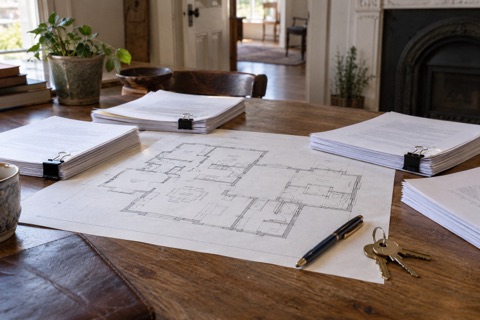
A contractor experienced in new construction may be excellent at installing electrical systems yet have limited experience working around a plaster ceiling that the owner wants to retain. Describe your house in practical terms: approximate construction era, number of occupied floors, finished and unfinished spaces, recent renovations, known older circuits and the features you care about preserving. Include access restrictions and the presence of children, pets or a resident who needs uninterrupted services. These details change the way a crew organizes the job and communicates with you.
Do not promise that all old wiring is accessible or that one room represents the whole building. A house altered over several decades can contain several different systems. Ask how the electrician will distinguish confirmed observations from assumptions. You are looking for a credible investigation process, not a confident answer delivered before anyone has looked at the building.
Ask for comparable projects, then ask useful questions
References become more valuable when the comparison is specific. A customer with an occupied two-story plaster house can tell you more about disruption than a customer who hired the same company for an empty addition. Ask the contractor to arrange references rather than requesting private customer information without permission. California's CSLB recommends written bids based on matching scopes and checking references and credentials. How do I find the right licensed contractor?
Ask each reference what the contract included, whether the crew arrived when expected, how changes were approved and what remained to be done after the electricians left. Ask whether the company returned for corrections. A reference who describes a difficult discovery and a clear resolution may be more informative than one who only says the crew was friendly. Treat photographs as evidence of the kind of work performed, while remembering that a photograph cannot establish the condition of concealed wiring.
Separate credentials from specialized experience
In California, the C-10 classification describes electrical contracting work. It is a contractor classification, not a claim that the holder specializes in historic houses. C-10 - Electrical Contractor Verify the actual business that will sign your contract and clarify whether employees or subcontractors will perform the work. The person giving the estimate may not be the person leading the crew. Request the name or role of the on-site lead and the channel for decisions that affect price, access or finishes.
A strong response might explain that the estimator will return for the opening walk-through and that the crew lead will stop for approval before an agreed protected surface is disturbed. A weak response is simply that they have been doing electrical work for many years. Ask enough follow-up questions to understand the proposed working method without trying to direct the technical installation yourself.
Put preservation expectations into the discussion
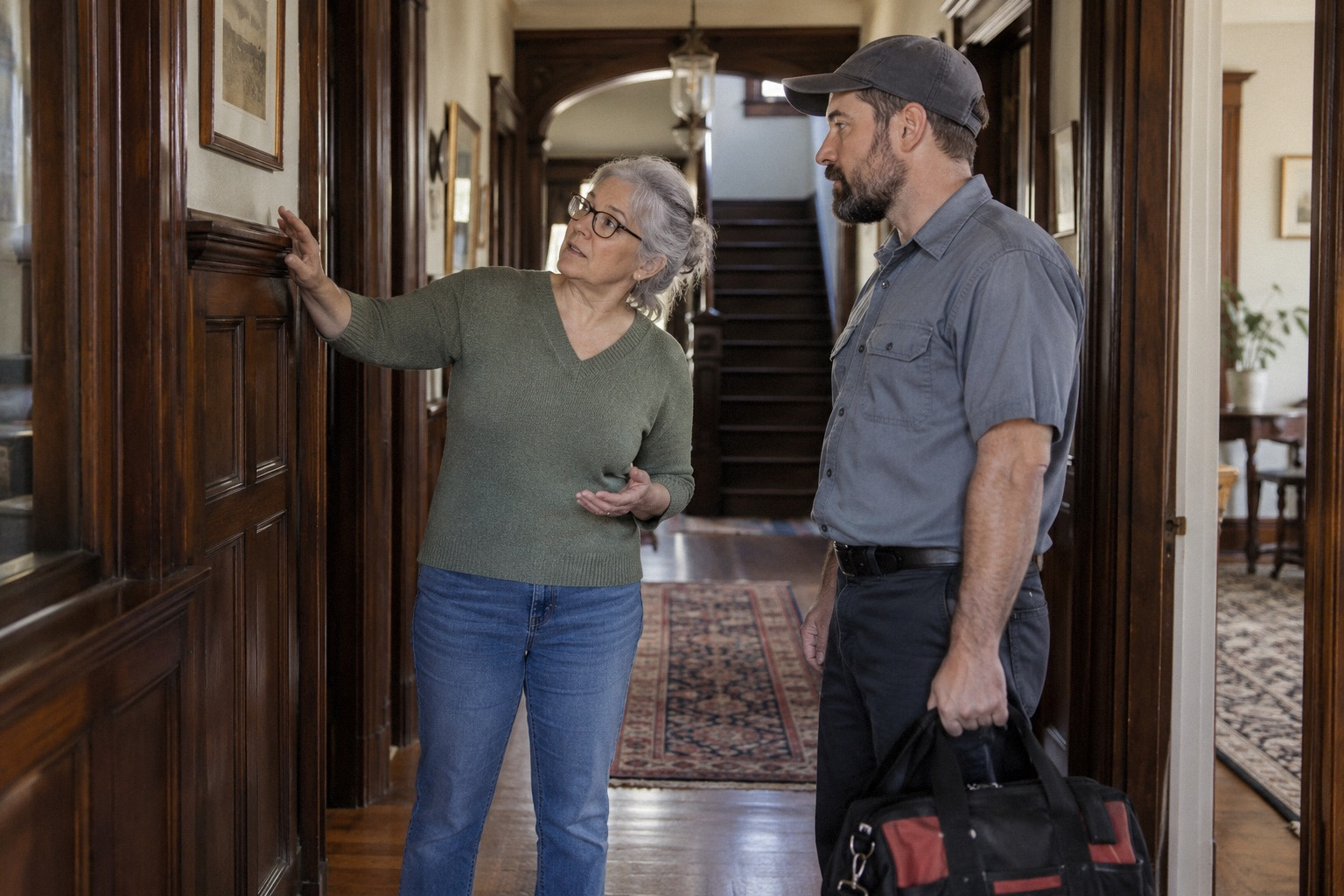
The National Park Service advises protecting character-defining interiors when introducing building systems. Preservation Brief 18: Rehabilitating Interiors in Historic Buildings For your project, turn that principle into a short list of specific features: a stair hall, ceiling medallion, original paneling, decorative plaster or a wall finish that cannot be matched casually. Tell candidates which areas need a separate decision before disturbance. Avoid demanding a promise of zero openings; instead, ask how proposed openings will be reviewed and who will restore them.
Find out whether the electrician includes patching, whether that work is performed by a separate trade and what finish level is included. An electrician who openly excludes painting can be easier to work with than one who promises to make everything look new without defining the result. Ask what happens if the required work proves more invasive than expected.
Hypothetical interview: two capable candidates
Imagine two firms looking at the same 1910 house. One provides a short total price and says its crew will work things out on arrival. The other proposes a documented survey, identifies the occupied bedroom as a scheduling constraint and separates electrical work from finish repair. The second proposal is more reviewable, but it is not automatically the better value. Ask the first firm for the same detail before making a decision.
Then compare answers to five project-specific questions:
- Who will verify which existing circuits belong in the agreed scope, and how will the findings be recorded?
- Who applies for permits, schedules inspections and attends when the inspector needs an explanation?
- Which rooms will be unavailable first, and who tells the household when that changes?
- Who approves additional openings or work, and how is the cost and schedule effect recorded?
- Who returns for electrical corrections, finish defects and the final delivery of records?
The purpose is to expose differences in service, not reward the longest proposal. A small firm can provide clear answers without a polished presentation. A large firm should still identify who owns decisions and who will be present in the house.
Make the selection with a written comparison
Use a simple comparison sheet with the same headings for every finalist: relevant experience, investigation, scope, preservation, occupancy plan, permit responsibility, restoration and communication. Record unresolved questions separately rather than filling gaps with assumptions. Once you choose a contractor, carry the agreed details into the contract. Verbal reassurances from an interview are difficult to use when a different crew arrives months later.
Do not let a friendly interview replace a review of exclusions. Ask the chosen contractor to confirm the final scope after any site investigation. Selection is complete when you understand what the company will deliver, what conditions could change that promise and who has authority to approve the change.
Your project checklist
Questions that come up next
Does a C-10 license prove historic-house experience?
No. In California it identifies a contracting classification; ask separately for comparable work, references and a practical preservation plan.
Should I require a guarantee that no walls will be opened?
Ask for a review process and defined restoration scope. An unconditional promise before investigation may not reflect the actual building.
Sources and further reading
- How do I find the right licensed contractor?
- C-10 - Electrical Contractor
- Preservation Brief 18: Rehabilitating Interiors in Historic Buildings
Questions from homeowners
These discussions helped identify the problem. Reddit experiences are anecdotal; technical and legal statements rely on the sources above.