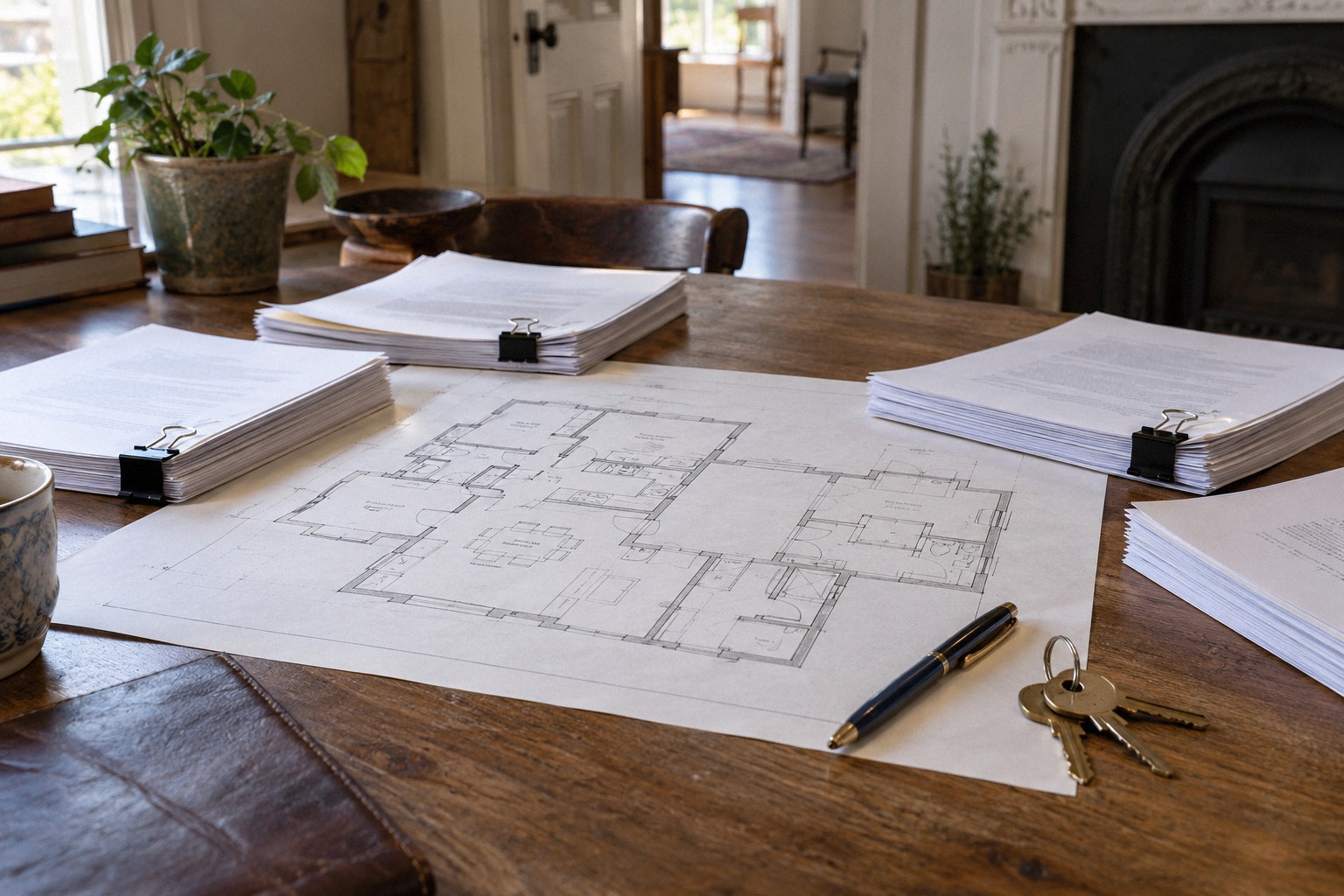
Define the project boundary in plain language
Begin with a room or area schedule. Include the main house, additions, basement, attic, garage, exterior equipment and detached structures only as applicable. Mark areas outside the contract explicitly. Then distinguish replacement of agreed wiring from optional improvements such as additional lighting or new appliance locations. This prevents a necessary safety project from quietly absorbing an undefined wish list.
Record existing installations that the contractor expects to retain and what assessment supports that decision. Do not require a promise about all concealed conditions before investigation. Instead, identify the initial evidence and the process for revising the scope if observations change. A contract can be clear while acknowledging uncertainty; vague certainty is less useful than a specific statement of what still needs to be established.
Describe deliverables rather than reassuring adjectives
Words such as professional, complete and up to code do not identify which fixtures the owner supplies, whether a new location is included or how wall repair will be finished. Use a device or room schedule for agreed selections and locations. State who checks compatibility of owner-supplied equipment and what happens if it arrives late or cannot be used as planned. Ask the contractor to review the schedule rather than assuming your drawing is an installation design.
California's CSLB identifies detailed work descriptions, permit responsibility, cleanup and completion information as important contract content. What is a Contract? For a project elsewhere, use the same clarity while checking local contract requirements. The contract should also identify who has authority to approve selections and changes. A casual comment to a worker should not become an unexpected bill or an instruction that conflicts with the plan.
Assign each approval task
Name the party responsible for the permit application, requested revisions, scheduling inspections, attending inspections and responding to corrections within the contracted scope. If utility involvement is possible, state who will establish the needed utility process and communicate the schedule. Avoid assuming that a building permit includes authorization to act on utility-owned facilities. Those are separate relationships.
San José's electrical project guidance illustrates why the scope matters: work under a particular permit must remain within that authorization. Electrical Projects The lesson for a contract is to identify how scope changes will be checked against the permit, not simply how they will be priced. A signed change order between owner and contractor may still need an agency revision before the changed work proceeds.
Make restoration and occupancy real parts of the scope
List wall and ceiling openings separately from the electrical installation. State whether the contractor provides rough patching, finish plaster, texture, priming or painting. Identify protected features and the procedure before disturbing them. Agree who moves furniture, protects belongings, manages daily cleanup and removes waste. If another trade will finish the surfaces, describe the handoff condition and the inspection stage required before closure.
For an occupied house, attach a practical access and outage plan. It need not predict every workday, but it should identify essential household needs and how changes will be communicated. A promise to leave the house usable means little unless both parties understand which rooms and services must be available. Include an agreed method for deciding when temporary relocation becomes necessary.
Hypothetical scope paragraph
A hypothetical owner and electrician might write that the project covers the rooms listed in an attached schedule, retains specifically identified recent work subject to assessment, and includes the inspections required for that scope. The owner supplies three named fixtures by an agreed date. A separate plaster contractor restores the named decorative ceiling after required approval to cover the work. Additional disturbances outside agreed areas require a documented review of scope, price and schedule.
That paragraph is an example of useful specificity, not a ready-made legal contract. It still needs the actual property, technical scope, selections, payment terms and applicable notices. Avoid copying it as a substitute for a properly prepared agreement. Its value is showing how responsibilities can be described so that the crew and owner can check them during construction.
Add an attachment register so documents cannot be confused:
- Scope schedule: room names, included work and deliberately retained installations.
- Selection schedule: fixtures, devices, finish preferences and supply responsibility.
- Access plan: occupied areas, protected features, work hours and outage communications.
- Approval plan: permit, inspection, utility and revision responsibilities.
- Restoration plan: opening repair, final finish, cleanup and separate trade handoff.
- Completion file: final records, agreed labels, warranties, outstanding items and contact details.
Keep the agreement current as decisions change
A rewire can evolve after inspection of previously inaccessible areas. In California, CSLB guidance calls for written changes to scope and price. What should I look for in a contract and binding agreements? Record the reason, the proposed response, the amount or pricing mechanism and the schedule effect before authorizing changed work. Keep superseded drawings or schedules marked so the crew does not follow an older version.
At completion, compare the delivered work against the current agreement, including approved changes. Do not rely on memory of the first estimate. A clear contract should help both sides close the project with fewer surprises: the owner can identify a missing promise, and the contractor can distinguish a defect from a new request. That is the practical test of whether the scope was sufficiently defined.
Your project checklist
Questions that come up next
Does whole-house rewire mean every wire is removed?
The contract must define replacement, retained work and treatment of abandoned material. Do not infer a physical-removal promise from the project label.
Can an email decision affect the scope?
Document decisions through the agreed change process and applicable law. Make sure authorized parties and the crew have the current version.
Sources and further reading
Questions from homeowners
These discussions helped identify the problem. Reddit experiences are anecdotal; technical and legal statements rely on the sources above.