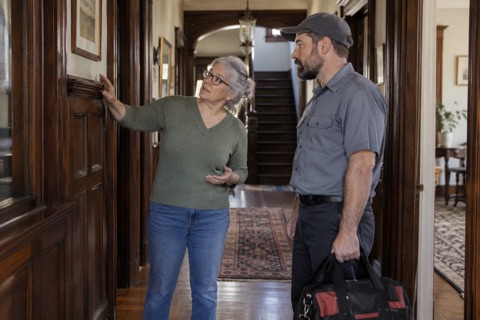
Find out what is known before discussing the model
A contractor pricing an empty house with open walls has different information from one inspecting an occupied house with finished rooms. List the observations already made and the questions still unresolved. Some uncertainty concerns electrical condition; other uncertainty concerns access, restoration, owner selections or approval requirements. Different types of uncertainty deserve different responses. A late fixture selection is not the same as an unexpected concealed condition.
Ask what additional investigation would meaningfully improve the proposal. A modest, defined assessment can be useful if it answers a specific question and produces a written result. Avoid paying for an open-ended visit described only as seeing what we find. Agree where investigation may occur, who repairs any resulting disturbance and what information will be delivered to support the next decision.
Understand a fixed price through its exclusions
A fixed price is meaningful only in relation to the work promised. Read the exclusions, allowances and assumptions with the same attention as the total. If every difficult condition can be reclassified as extra work, the apparent certainty may be limited. On the other hand, requiring a contractor to absorb conditions that cannot reasonably be assessed may lead to a higher bid or reluctance to quote.
California's CSLB advises owners to compare matching written scopes. How do I find the right licensed contractor? Apply that principle when comparing pricing models too. A fixed-price proposal covering restoration and inspections is not directly comparable with hourly electrical work that excludes both. Ask the contractor to identify which events would change the price and how the owner will approve the response.
Give time and materials a working set of controls
An hourly arrangement needs more than an hourly rate. Clarify the categories of labor, material billing method, travel or mobilization charges, minimum increments, supervision charges and any subcontractor costs. Ask how records will be shared and how often the owner will receive an updated estimate to finish. A total spent to date does not tell you whether the remaining work is small or extensive.
Set a decision threshold that triggers a conversation before further discretionary work is authorized. A not-to-exceed figure needs careful definition: does it cap the entire promised result, or does it merely stop work until a new authorization? Those are different agreements. Discuss what condition the project will be left in if authorization stops at that point and which safety or stabilization duties remain.
Separate discovery from changing your mind
Owners sometimes add outlets, move fixtures or request extra rooms once work starts. Those choices should not be mixed with a contractor's discovery of unforeseen conditions. Maintain separate entries for owner-requested additions and necessary responses to new information. Each entry should explain why it exists and how it affects cost and schedule.
CSLB's California guidance emphasizes written changes and financial clarity. What is a Contract? Its contract guidance also addresses changes in materials and completion dates. What should I look for in a contract and binding agreements? The practical lesson is to document more than the dollar amount. A cheaper substitution that delays the job or changes a visible finish may still be an important decision. Outside California, check the applicable contract rules while using similarly clear records.
Hypothetical two-stage arrangement
Imagine a house with recent wiring downstairs and uncertain older wiring upstairs. Rather than assuming the entire upper floor has one condition, the parties agree to a defined assessment with specific access permissions and a written findings report. The contractor then offers a fixed construction scope for confirmed work and identifies any remaining uncertainty in a narrow allowance or separately authorized task.
This arrangement can improve clarity, but it is not automatically appropriate for every project. The investigation must have useful outputs, and the owner should understand whether the assessment commits them to use the same contractor for construction. If it does not, ask for records sufficiently clear that another qualified bidder can understand the findings without treating them as a guarantee of every concealed condition.
Before choosing a model, complete these comparisons:
- Known work: identify the result that can already be described and priced with reasonable confidence.
- Uncertain work: identify the specific observation or approval needed to reduce each uncertainty.
- Reporting: state when labor records, material records and estimates to finish will be provided.
- Approval: identify who can authorize additional spending and how that authorization is recorded.
- Stopping point: describe the safe, documented condition required if a budget decision pauses further work.
- Restoration: identify whether investigation and construction openings are covered by the same finish allowance.
Judge the agreement by how a difficult week would work
Ask the contractor to walk through a hypothetical discovery. What would you receive that day? Who explains the options? When would you know the likely total and schedule impact? Could unrelated work continue while the decision is made? A pricing model that cannot answer those questions is likely to create friction regardless of its label.
Choose the structure that fits the information available and your ability to manage decisions. An owner who cannot review frequent records may prefer a more defined construction package after investigation. An experienced project manager may accept carefully controlled variable work. In either case, preserve the agreed scope, reporting and change process in writing so that a staffing change does not erase the understanding.
Your project checklist
Questions that come up next
Does not-to-exceed always guarantee completion for that amount?
No. Read whether it is a true cap on a defined result or an authorization limit that stops further work pending a decision.
Should investigation be a separate contract?
It can be a useful separate stage when it has clear questions, access permissions, restoration duties and deliverables. The appropriate agreement depends on the project and local law.
Sources and further reading
- How do I find the right licensed contractor?
- What is a Contract?
- What should I look for in a contract and binding agreements?
Questions from homeowners
These discussions helped identify the problem. Reddit experiences are anecdotal; technical and legal statements rely on the sources above.