Two heat-producing processes
A heat pump moves heat using a refrigeration cycle. Resistance heat converts electrical energy directly into heat. DOE's DOE Home Heating infographic (2014): operating principles explains the heat-pump principle, which is why its heat output can exceed its electrical input.
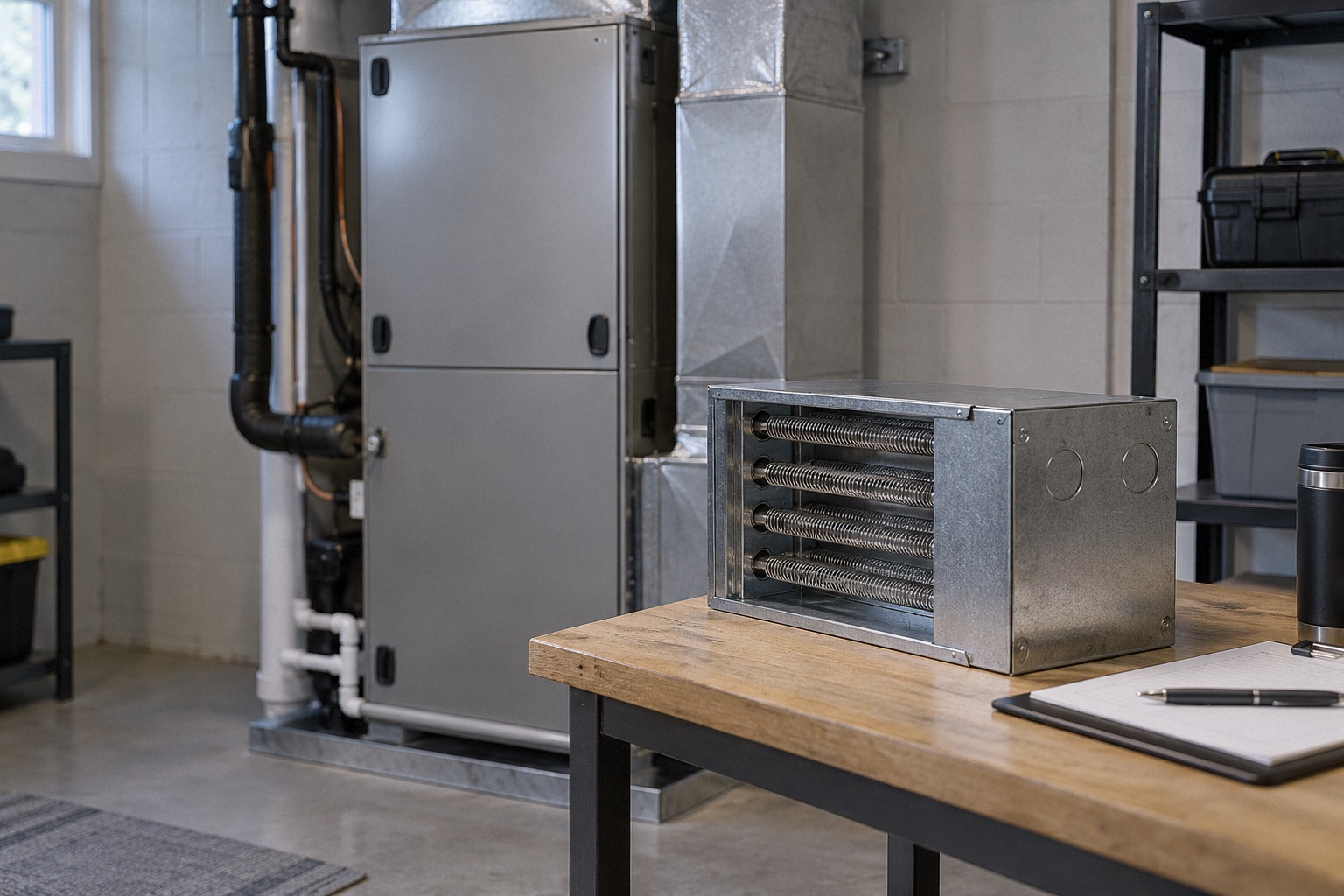
The distinction matters when reading a proposal. A system described as an efficient heat pump may still include resistance elements for particular conditions. Those elements are not made electrically small by the compressor's efficiency. Their rating needs to appear explicitly in the equipment and electrical discussion.
Kilowatts make the difference visible
Consider two hypothetical resistance packages rated at 5 kW and 10 kW at 240 V. Dividing power by voltage gives approximately 20.8 A and 41.7 A respectively for the resistive load at those stated conditions.
These are illustrative current calculations, not circuit-sizing instructions. Actual installation must use the selected equipment data and applicable requirements. The example shows why an apparently modest option change can materially alter electrical demand even though the outdoor unit remains the same.
A stage is an operating level
Some systems can operate backup heat in stages rather than switching the entire package on in every situation. The electrical design still needs to account for the allowed operating configurations specified by the manufacturer.
The homeowner should understand which stages exist and when they are intended to operate. Do not assume that a rarely used stage can simply be ignored in design. Conversely, do not infer actual annual energy use by pretending the full package runs continuously throughout the heating season.
Controls affect operation, not the need for sound design
DOE's Controls for a Heat Pump With Secondary Heating addresses coordination between heat pumps and secondary heating. Controls can influence which heat source operates and under what conditions.
A control setting is not a substitute for a suitable electrical installation. Nor should an owner alter lockouts or disable backup equipment based on a general article. The heating professional should establish settings that fit the equipment and the home's needs, and the electrical design should reflect the system as installed and configured.
Distinguish normal backup operation from a fault
Backup heat may operate under intended conditions, but unusually persistent use can also point to a system problem. A failed heat-pump function, incorrect control arrangement or other fault may change the energy pattern.
A high bill alone does not identify the cause. Record when the system indicates auxiliary or emergency heat and describe any changes in comfort or operation. A qualified diagnosis should determine whether the behavior matches the design before anyone recommends larger wiring, new equipment or control changes.
A hypothetical winter surprise
Imagine an owner who approved a heat-pump proposal based on the outdoor unit's electrical data. The installed indoor system includes a resistance package that was not discussed during the electrical assessment. During cold weather, that package operates as designed.
The issue is not necessarily that the heater is inappropriate. The planning failure is that its demand was omitted. A complete design would have included the package, its electrical requirements and its expected role before the circuit and service decisions were made.
Equipment ratings still govern
Carrier's 3 Ton Heat Pump Guide: Sizing and Electrical Requirements explains the role of minimum circuit ampacity and maximum overcurrent protection in equipment electrical design. Those values must be taken from the applicable components and configurations, not guessed from a generic system size.
Where a heater kit changes the indoor unit's requirements, the relevant documentation must be included. Ask whether the electrical data in the proposal describes the base unit, the heater-equipped unit or both. That distinction can prevent a mismatch between the selected equipment and the circuit installed for it.
Backup strategy is a heating decision with electrical consequences
Possible strategies depend on the house and selected system. They may include different equipment capability, a resistance package or another designed secondary source. The comparison needs to preserve adequate heating performance.
Do not frame the decision solely as avoiding a panel upgrade. A technically smaller electrical load is not automatically the right heating system if it fails the home's needs. The trades should compare suitable heating options and then evaluate their electrical consequences.
Old-house improvements can affect the design
Known insulation or air-sealing work may change the heating requirement, but it should be represented by the heating designer rather than guessed by the electrician or homeowner. Existing drafts and room distribution also affect comfort.
Share scheduled building improvements before equipment selection is finalized. This can help avoid designing around a condition that is about to change. It does not justify reducing backup capacity without a supported heating analysis.
A useful decision record
The final record should identify the backup equipment, relevant electrical ratings, intended operating role and who established the controls. It should also distinguish calculated design demand from expected energy consumption.
For California and other climates, local conditions matter. The same backup package and control strategy should not be assumed appropriate everywhere. A coordinated explanation allows the owner to understand why the backup exists, what it adds electrically and how the complete system is intended to operate.
Your project checklist
Questions that come up next
Can I ignore backup heat because it rarely runs?
Not automatically. The electrical design must account for the installed equipment and allowed operating configurations under applicable requirements.
Should backup heat be disabled to avoid electrical upgrades?
That decision requires a supported heating design and manufacturer guidance. Do not change controls or remove a needed heat source solely to reduce electrical demand.
Sources and further reading
- DOE Home Heating infographic (2014): operating principles
- Controls for a Heat Pump With Secondary Heating
- 3 Ton Heat Pump Guide: Sizing and Electrical Requirements
Questions from homeowners
These discussions helped identify the problem. Reddit experiences are anecdotal; technical and legal statements rely on the sources above.