Select the system before finalizing the circuit
A heat pump is not one electrical load shared by every model of the same nominal size. Equipment design, voltage, indoor components and optional heaters can change the requirements.
Carrier's 3 Ton Heat Pump Guide: Sizing and Electrical Requirements explains that minimum circuit ampacity, abbreviated MCA, and maximum overcurrent protection, abbreviated MOCP, inform wiring and protective-device selection. MCA is not a promise of ordinary running current, and MOCP is not a statement that the machine continuously draws that number. The actual equipment documentation governs.
Heating capacity is not electrical input
Heating capacity describes the rate of heat delivered; electrical input describes the power consumed. A heat pump transfers heat, so the two values are not interchangeable. The DOE's DOE Home Heating infographic (2014): operating principles explains that basic operating principle.
This matters when owners compare a heat-pump capacity stated in British thermal units per hour with an electric heater's kilowatt rating. Those figures describe different quantities unless converted and interpreted correctly. Circuit design should use the equipment's electrical data, not a casual conversion from the advertised heating capacity.
Identify every electrical component
A split system can include an outdoor unit and indoor equipment, while some designs add separate electric resistance heat. The installer should identify which components need electrical supplies and which connections are part of the manufacturer's system.
Do not assume the old furnace circuit can serve every new component. Likewise, do not assume that an existing air-conditioning circuit is automatically unsuitable. Its condition, ratings, conductor arrangement and route need to be compared with the selected equipment.
Backup heat can change the picture
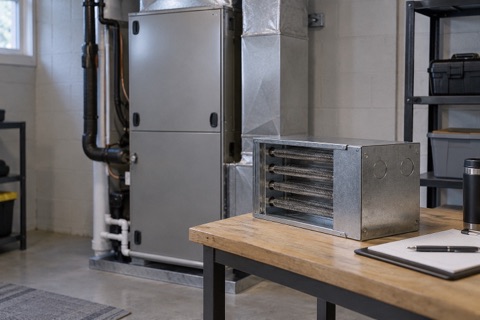
An optional resistance heater can add substantial demand compared with the compressor alone. The decision to include it should follow the heating design, climate and equipment capability rather than being treated as a minor accessory.
For a hypothetical illustration, a 5 kW resistance element operating at 240 V corresponds to about 20.8 A of electrical current before considering installation and circuit-design requirements. That arithmetic is not a wire or breaker recommendation. It shows why leaving the heater out of the planning conversation can materially understate the system's electrical needs.
Separate branch suitability from whole-house capacity
A new heat-pump branch and the home's service capacity are related but distinct questions. A suitable service does not prove that an old branch can be reused, and an unsuitable branch does not automatically require a larger service.
The Homeowner and Renter Energy Resources encourages coordinated electrification planning. Applied here, the useful approach is to review the heating equipment alongside other planned loads while preserving a separate assessment of each circuit. Avoid adding every breaker handle rating together as though that alone establishes actual household demand.
A hypothetical equipment comparison
Imagine two proposed systems that both meet the home's heating needs. One uses a particular outdoor unit with a separate large resistance backup package. The other uses different equipment and a different backup strategy.
The electrical comparison should include all components and the actual system design. It should not rank the proposals by outdoor-unit size alone. The preferred system may depend on comfort, climate performance, routing and electrical constraints together. A capacity discussion made before the backup package is selected is necessarily incomplete.
Old-house routes need endpoint information
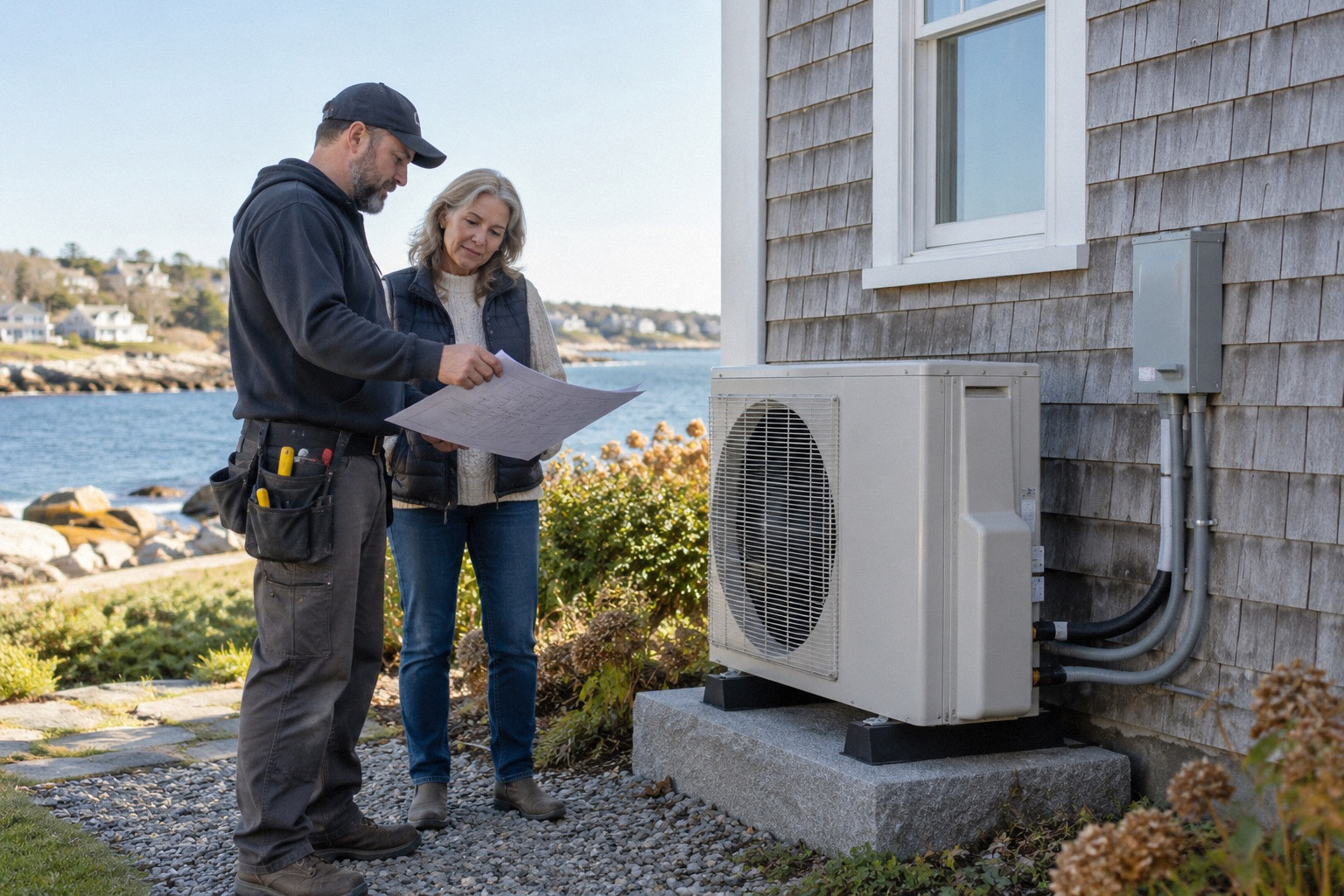
The location of the outdoor unit affects where the circuit leaves the building. The indoor equipment location may create another route. Condensate, refrigerant lines and service access also compete for space.
Coordinate these paths before opening finishes. A new electrical route that looks convenient in isolation may conflict with the final equipment placement or require another opening later. The homeowner can help by confirming which exterior and interior locations are genuinely available.
Existing circuits need evidence
If reuse is proposed, ask what was checked: the circuit's conductor arrangement, condition, protective device, route and suitability for the selected equipment. A breaker label reading AC is not enough.
If replacement is proposed, ask which mismatch makes it necessary. This keeps the recommendation specific. It may be the circuit rating, missing conductor, deterioration, unsuitable route or another identified condition, rather than the mere age of the house.
Useful documents before electrical design
Collect the selected outdoor and indoor model numbers, applicable installation instructions and any heater-kit information. Include the heating professional's design assumptions about backup operation.
Those documents allow the electrician to work from the actual system. A brochure that advertises efficiency or nominal capacity is insufficient if it omits the electrical data. If equipment selection changes, the circuit design should be reviewed before installation proceeds.
California context
California contains mild coastal areas and much colder inland or mountain conditions. A backup strategy appropriate to one location should not be generalized across the state. The local electrical requirements and selected equipment instructions also govern the installation.
The practical sequence is a coordinated system selection, capacity assessment and route design. That resolves the apparent chicken-and-egg problem: the trades can develop options together without ordering an unnecessary service upgrade or promising that an unidentified old circuit will work.
Your project checklist
Questions that come up next
Does a heat pump always require a larger service?
No. Evaluate the selected equipment and other household loads. A new branch circuit may be needed even when the existing service remains adequate.
Are MCA and MOCP the same as running current?
No. They are equipment electrical-design ratings with different purposes; normal operating current is a separate quantity.
Sources and further reading
- 3 Ton Heat Pump Guide: Sizing and Electrical Requirements
- DOE Home Heating infographic (2014): operating principles
- Homeowner and Renter Energy Resources
Questions from homeowners
These discussions helped identify the problem. Reddit experiences are anecdotal; technical and legal statements rely on the sources above.