Screen the actual activities, not only the trade name
A homeowner may think of rewiring as work behind walls, but access openings can disturb painted plaster, trim and other surfaces. Later restoration can create additional disturbance. Ask the contractors to describe those activities and determine how the applicable renovation rules address them. Do not assume that electricians are outside the issue because their primary work is electrical, or that a painter hired later automatically handles everything.
EPA's current renovation planning guide addresses covered work in pre-1978 housing and child-occupied facilities. Steps to Lead Safe Renovation, Repair and Painting Use the current program information and any authorized state requirements. The owner should know who is making the applicability determination and what information supports it. If testing or another assessment is proposed, ask about its scope and what it establishes for the specific surfaces affected.
Check the firms and the working arrangement
Ask each company disturbing painted surfaces how it meets applicable certification and work-practice requirements. Identify the responsible renovator and how the crew is directed. If the electrical contractor uses another firm for openings or restoration, clarify the handoff rather than assuming the subcontract removes the question. Keep the relevant records with the project agreement.
Do not demand a generic assurance that the house will be dust free. Ask what work area will be established, how belongings and routes are addressed, who performs cleanup and what completion record is provided. Those questions produce a reviewable plan. They also reveal whether the electrical and finish proposals leave an unassigned interval between trades.
Understand what the work area means
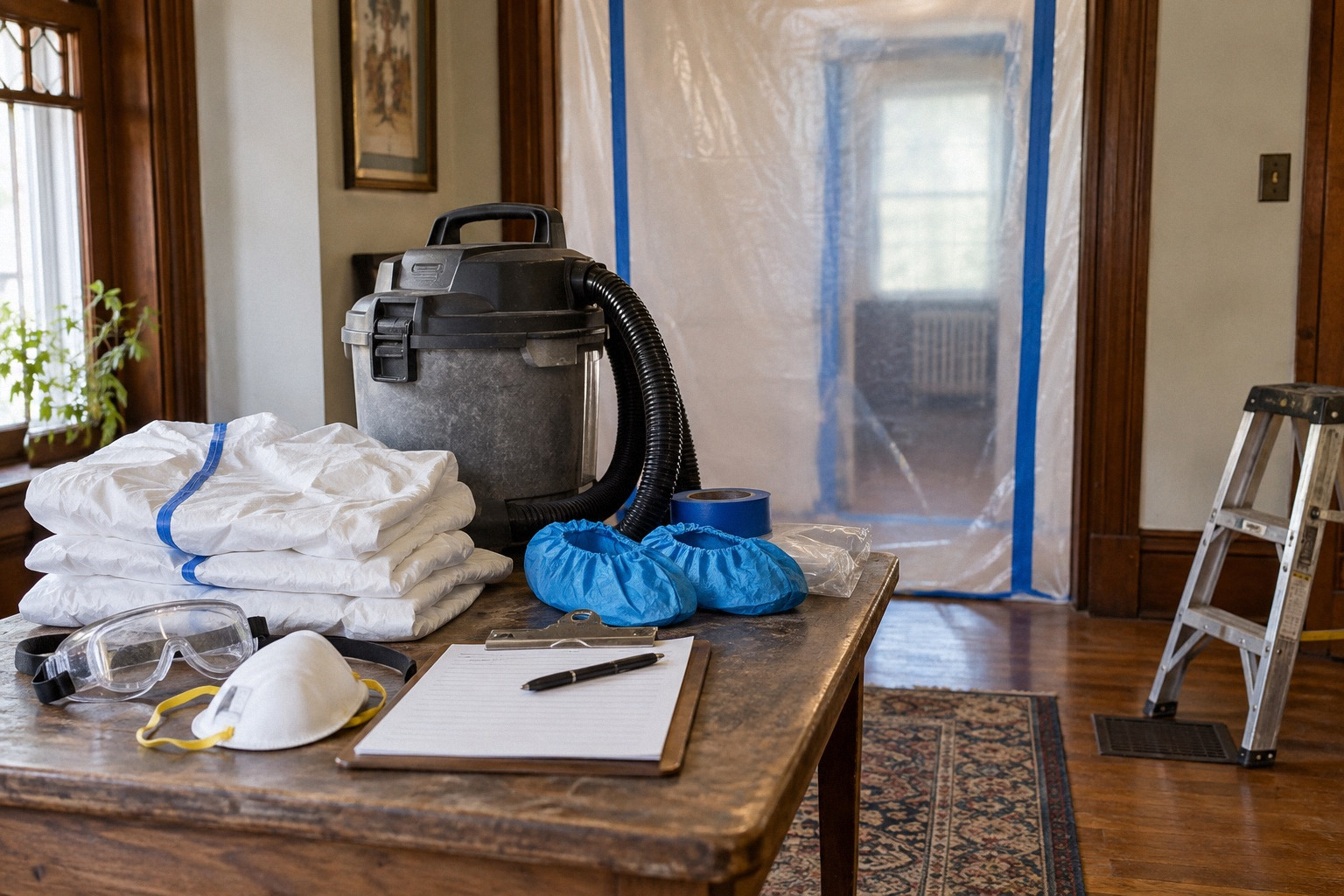
EPA explains that the work area is the area established by the certified renovator's containment. Its interior guidance describes floor protection extending beyond disturbed surfaces, with provisions for suitable vertical barriers. What is the work area? The point for the homeowner is that containment has an actual boundary and purpose; it is not just a visual sign that a contractor is being careful.
Ask which rooms and connecting paths will be unavailable and how residents will reach essential spaces. Do not move barriers or return belongings based on the crew's temporary absence. The responsible person should explain when an area can be entered and when it is ready for the next stage. Plan for children, pets and visitors who may not understand the restrictions.
Carry responsibility through restoration
Electrical work, plaster repair and painting may occur on different days with different firms. Establish who maintains the area between those visits and who changes the setup as the activity changes. A completed electrical task does not necessarily mean the renovation disturbance is over. The household needs a continuous plan through the final affected operation.
California's CSLB contract guidance supports defining cleanup and work responsibilities. What is a Contract? Put the agreed services into the relevant scopes rather than leaving them as an informal promise. Identify whether the restoration proposal includes its own required setup and cleanup, and avoid paying twice for an assumed service while still leaving a gap nobody owns.
Hypothetical responsibility review
Imagine electricians plan several openings in painted plaster, followed by a separate plasterer and painter. The owner asks each firm what surfaces it will disturb and how the applicable program requirements are met. The parties then define which company establishes the work area, who maintains it between visits and who documents completion of its own responsibilities.
A useful record includes:
- Building and surfaces: construction era and the specific painted areas expected to be affected.
- Applicability assessment: who determines the relevant requirements and what testing or documentation is used.
- Firm responsibilities: electrical, opening, restoration and painting companies, with the relevant qualification information.
- Work area: rooms, boundaries, belongings and resident routes to be addressed before disturbance.
- Inter-trade handoff: who maintains protection while one crew leaves and another is waiting.
- Cleanup and records: the process and documentation included under the applicable program and contract.
- Return to use: who confirms the appropriate completion of the work area before the household resumes normal activity.
This is a management example, not an abatement procedure or a substitute for a certified renovator's plan.
Distinguish cleanup verification from broader claims
Ask what the contractor means by clean, cleared or tested. Different processes and documents can answer different questions. Do not assume a general cleaning invoice establishes a lead dust test result, or that a renovation completion record assesses every unaffected surface in the house. If independent testing is desired or required, define it separately with a properly qualified provider and the applicable rules.
Keep the final records with the rewire documents and note the areas actually addressed. If an unexpected material or condition is found, have the responsible professional assess it before work continues through that area. Avoid improvising removal or relying on an online photograph to identify a hazard. The value of early planning is that a necessary electrical project can proceed with clear responsibility for the building surfaces it disturbs.
Your project checklist
Questions that come up next
Does an electrician automatically handle every lead-related requirement?
Do not assume that. Identify the actual disturbances, applicable program and responsible firm or renovator for each phase.
Is ordinary dust cleanup the same as testing or clearance?
No. Ask which process and document are being provided and what area and question they address.
Sources and further reading
Questions from homeowners
These discussions helped identify the problem. Reddit experiences are anecdotal; technical and legal statements rely on the sources above.