A covering is not a wiring method
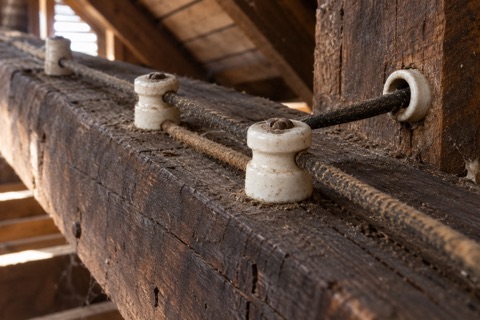
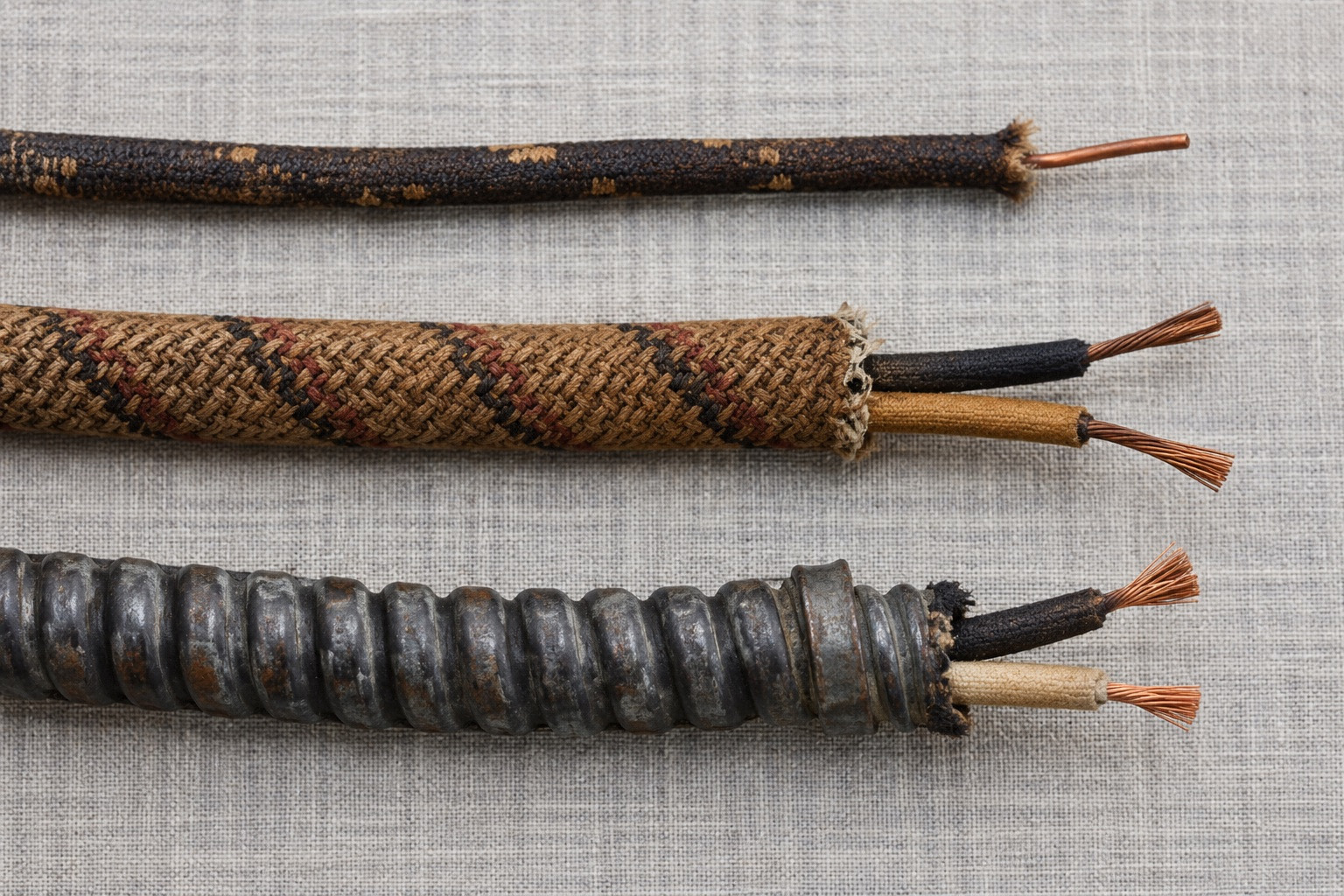
The HUD electrical inspection guide specifically notes that older nonmetallic cable may have a cloth covering. It separately describes knob-and-tube construction and armored cable. That distinction explains why a social-media photograph can attract contradictory answers: commenters may be naming a visible material rather than the system carrying power. When requesting an assessment, use the description you actually know. Fabric-covered cable entering a box is more accurate than declaring that every circuit is knob-and-tube. The electrician can identify the construction while investigating its connections and condition.
Think in layers, without disturbing them
An electrical conductor, the insulation around it and an overall cable jacket perform different functions. Damage to an outer covering is not automatically identical to failed conductor insulation, but it should not be dismissed from a photograph either. Several aged materials can be present at once. A fabric surface may conceal rubber that has hardened or cracked. Pulling a device forward or scraping a conductor to answer a question can change the condition being assessed. Describe visible deterioration, preserve photographs already available and leave identification that requires movement to a qualified person.
Grounding is a separate question
The name cloth-covered does not tell you whether an effective equipment-grounding path exists. Metal armor, an added grounding conductor or a newer cable can require different evaluation. Similarly, a three-prong receptacle does not establish a proper grounding connection. A report that says only cloth wire present leaves important questions unanswered. Request the identified wiring method, where it was observed, which devices it supplies and what was established about grounding. These findings allow an estimate to address actual deficiencies instead of charging for, or overlooking, a vaguely named material.
Condition changes the assessment
The Indiana historic-preservation discussion explains that early cloth, rubber and paper insulating materials age and that heat can accelerate deterioration. The NFPA conductor research also discusses how movement can open cracks in thermally aged insulation. These sources support a careful condition assessment, not a universal expiration date for every fabric-covered wire. Look to the professional findings about missing insulation, damaged connections and evidence of overheating. A house-wide replacement recommendation should explain its basis and scope, rather than rely solely on the word cloth.
Use precise terminology in financial decisions
An insurer may ask about knob-and-tube, aluminum wiring or electrical updates as separate subjects. Do not translate an uncertain fabric observation into an unsupported yes or no answer. Supply the report and ask what further clarification the underwriter requires. The same precision helps compare estimates. A proposal to replace two accessible deteriorated cable runs differs from replacing all active legacy wiring. Request locations and the intended result in ordinary language. If an inspection remains incomplete, carry that uncertainty into the budget and application instead of assuming a reassuring label resolves it.
Avoid a material-based replacement percentage
Suppose two rooms show cloth jackets and a third contains metal-covered cable. Counting those appearances does not establish which conductors require replacement. One location may have intact accessible covering but uncertain hidden connections; another may show local deterioration. Request condition findings by location, then compare the proposed corrections. A material inventory describes what exists. A repair scope explains what must change and why. Keeping both records prevents a visual material count from becoming an unsupported measure of cost or urgency.
A practical example
Hypothetical example: A homeowner sees woven dark material where a cable enters an old ceiling box and receives an online reply identifying knob-and-tube. Another commenter calls it armored cable. Neither reply includes the hidden path. The electrician documents the actual method in the accessible area, identifies deteriorated conductor insulation near the fixture and notes other rooms that were not examined. The owner now has three distinct facts: a system identification, a local condition problem and an unresolved extent. The estimate can address the damaged circuit and state whether further investigation is included. This is more useful than arguing over a photograph or assuming that the same covering appears throughout the house. If insurance requires a broader report, its requested scope can be arranged before work is authorized.
Questions to resolve before deciding
- Use fabric-covered as an observation until the wiring method is identified.
- Ask whether damage affects a jacket, conductor insulation or a connection.
- Request a separate finding about any equipment-grounding path.
- Keep inaccessible rooms and unexamined circuits listed as unknown.
- Match insurer questions to the actual professional report rather than internet labels.
Frequently asked questions
Does cloth wiring always mean knob-and-tube?
No. Historical nonmetallic cable can have a cloth jacket, and fabric can appear in other older assemblies. Identify the arrangement and construction rather than using texture alone. A system name still does not establish whether its condition or installation is acceptable.
Should I peel the fabric back to see what is underneath?
No. Disturbing an aged covering can damage insulation or expose an energized conductor. If identification requires opening equipment or moving conductors, have a qualified electrician perform it under appropriate safe working procedures. Homeowner photographs should be obtained without disturbing the assembly.
Sources and further reading
- Residential Rehabilitation Inspection Guide, electrical chapter
- Lighting it up
- Electrical conductor research, historical findings
Questions from homeowners
These discussions helped identify the problem. Reddit experiences are anecdotal; technical and legal statements rely on the sources above.