Start with the complete arrangement
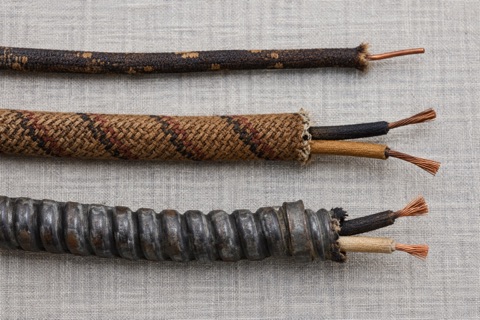
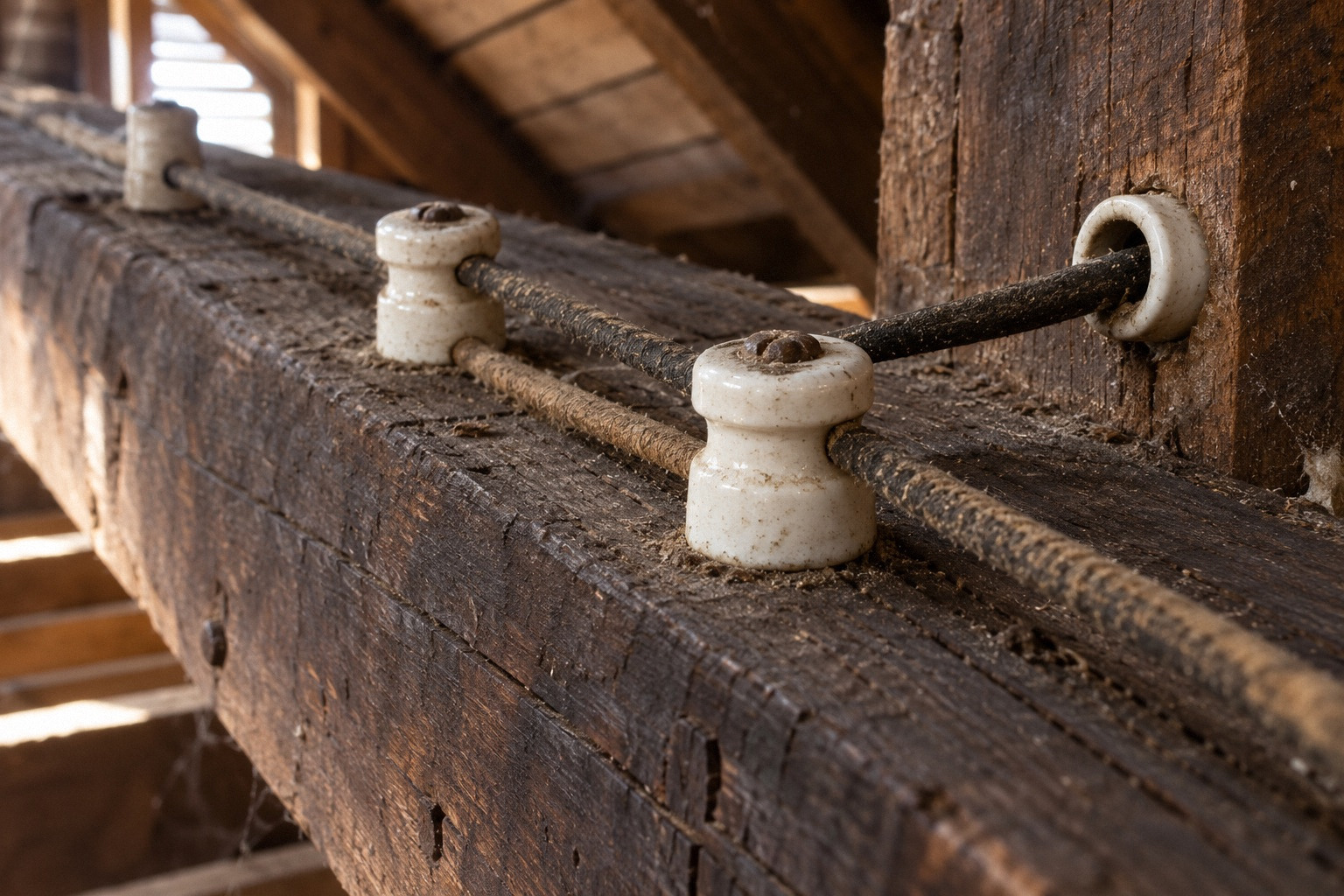
The Department of Energy glossary describes a system of copper conductors carried on porcelain supports. The separated paths matter. A single cable containing several insulated conductors is a different construction, even when its outer jacket resembles fabric. Ceramic tubes normally protect a wire at framing penetrations; knobs support wires along their route. An isolated piece of porcelain might remain after alterations. Record what is visible without treating one object as a diagnosis of the entire house. A photograph showing the surrounding framing and accessible wire path often communicates more than a close-up that removes this context.
Separate observations from conclusions
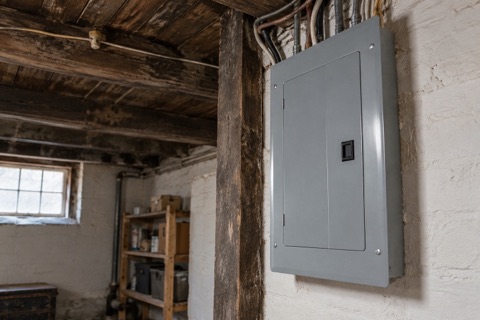
The HUD rehabilitation inspection guide illustrates old wiring and distinguishes it from other cable types. Its historical photographs are useful for recognition, but do not determine the condition of your installation. Write observations plainly: two separate dark conductors on ceramic supports above the hallway, for example. Avoid upgrading that description to an assertion that the circuit is safe, disconnected or original. Likewise, a newly installed panel elsewhere does not explain where those conductors terminate. A house can contain several generations of work, and the oldest visible component may or may not still carry power.
Photograph safely and preserve context
Use photographs you can obtain from an ordinary accessible position without touching equipment or entering an unsafe attic. Include a wider view, the location and any visible transition to newer wiring. Label photographs by room or access opening. Do not lean against wiring, shift stored objects entangled with it or strip away a jacket to identify the metal underneath. Images may show a broken covering or an unsupported section, but they cannot establish a hidden connection, verify every source of power or prove conditions behind a wall. Remote opinions should guide questions for a visit, rather than substitute for one.
Ask for identification and extent separately
An assessment should answer which wiring methods are present, what visible defects exist and which areas remain uncertain. The NFPA 73 description treats existing-dwelling inspection as a defined examination of electrical conditions. Ask the electrician to distinguish confirmed findings from areas that could not be inspected. If the visible remnants are inactive, request a description of the assessed area rather than an unsupported promise that every old wire throughout the building is dead. If some remain active, identify the affected circuits or devices sufficiently to plan the next investigation.
Use the finding to set the next decision
The appropriate next decision depends on why you looked. A homebuyer needs evidence before contractual deadlines. A homeowner preparing attic insulation needs the wiring issue resolved before the insulation crew begins. Someone who found a loose old ceramic piece while organizing a basement needs identification, without assuming an emergency from the object alone. Visible damaged conductors, heat damage or electrical symptoms increase urgency. Keep observation separate from hands-on inspection: the useful homeowner role is to preserve access information, prior records and photographs so the professional investigation begins with a clear question.
Keep historical identification separate from dating
Construction details may suggest an era, but they do not establish the installation date or the date of later alterations. A home built in 1905 could have electrical work from several decades. Ask the professional to identify the system without assigning an exact year unsupported by records. This matters when an insurer requests update dates: the age of the building, the apparent age of a component and the documented date of replacement are three separate pieces of information.
A practical example
Hypothetical example: A buyer notices ceramic knobs along a basement joist. One carries a cut remnant, while another appears to carry a wire into the ceiling. The listing says the electrical system was updated. Instead of deciding that both are abandoned because the panel looks new, the buyer records the location and asks for an electrical assessment. The resulting report may identify one disconnected remnant and another section that still needs tracing. Those are two different findings. The buyer can then obtain a quote and insurance review for the actual remaining scope. The report should describe its limitations if finished ceilings prevent a complete view. Neither a photograph nor the listing language establishes complete replacement; the value of the inspection is its supported distinction between known conditions and unresolved areas.
Questions to resolve before deciding
- Record where ceramic supports and separate conductors are visible without touching them.
- Keep wide photographs that show framing, transitions and access limitations.
- Ask which findings establish wiring type and which establish active status.
- Collect prior invoices and reports describing the actual work performed.
- Resolve inaccessible or uncertain sections before relying on a whole-house claim.
Frequently asked questions
Can a ceramic knob remain after a rewire?
Yes. Supports and disconnected remnants may be left in place. Their presence shows historical use, but does not by itself prove that an active circuit remains. Conversely, one visibly cut remnant does not establish that every nearby conductor is disconnected. Ask about the particular area and scope assessed.
Can I identify it from the outlet style?
An outlet face is weak evidence of the wiring behind it. New devices can be connected to older conductors, and ungrounded outlets occur with more than one wiring method. A useful identification considers the actual wiring arrangement and the professional assessment of accessible components.
Sources and further reading
- Weatherization Assistance Program glossary
- Residential Rehabilitation Inspection Guide, electrical chapter
- NFPA 73: Electrical Inspections for Existing Dwellings
Questions from homeowners
These discussions helped identify the problem. Reddit experiences are anecdotal; technical and legal statements rely on the sources above.