Follow the boundary of the work
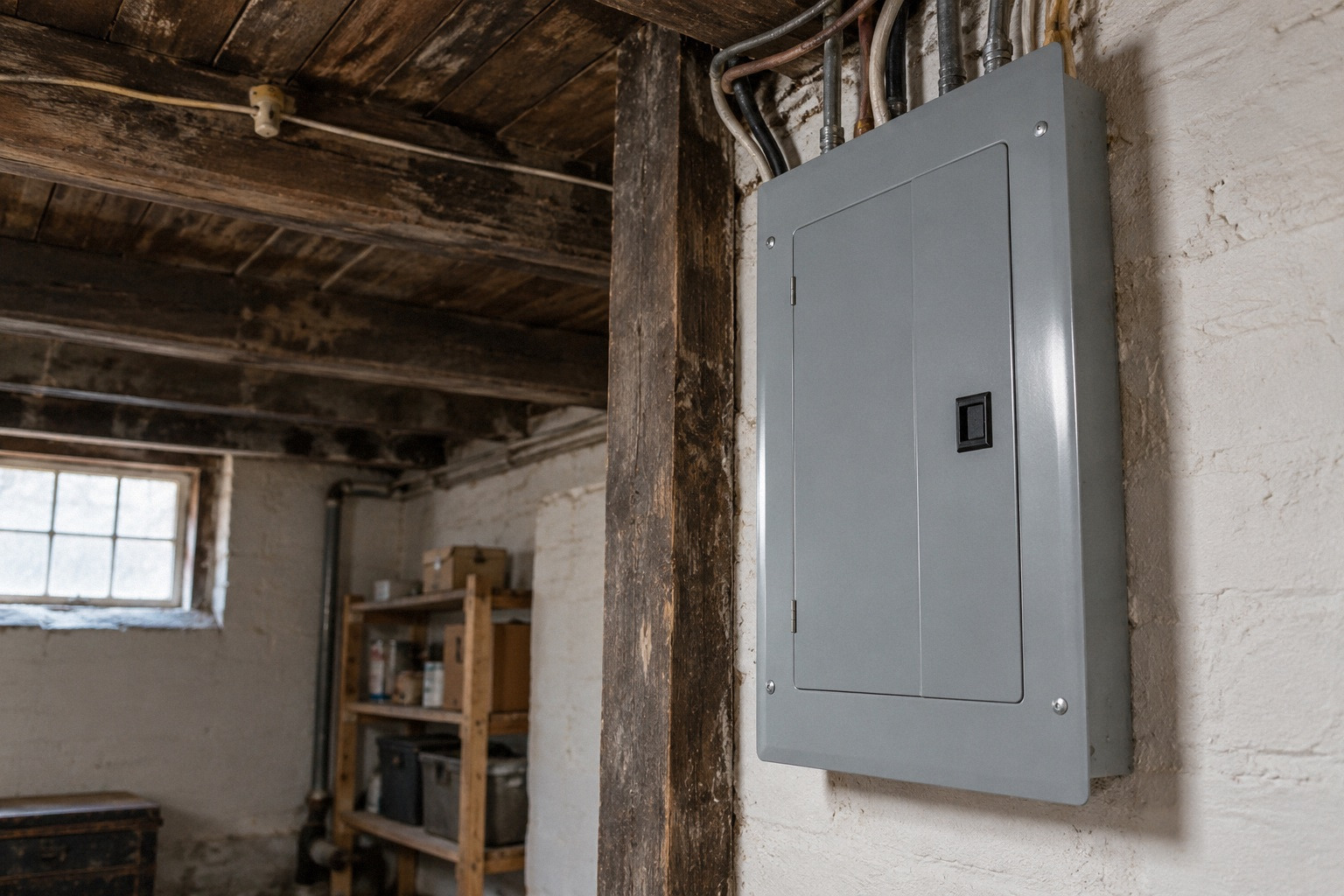
The CPSC wiring guide distinguishes the electrical panel from the branch circuits it supplies. Replacing the distribution equipment therefore does not inherently replace every downstream conductor. The same reasoning applies when a service is increased: additional available capacity does not improve the insulation on an existing branch circuit. A permit or invoice whose description concerns a panel should be read at that scope. It can be good evidence that panel work occurred, while providing little information about a bedroom light or a cable hidden above a finished ceiling.
Understand why modern cable can be misleading
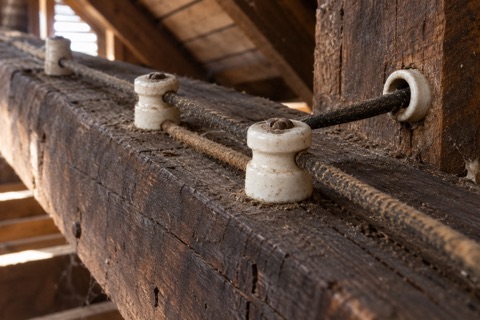
An electrician looking at a system may find newer cable near the panel and older wiring farther downstream. The transition itself requires professional evaluation, but its mere existence is not proof that someone intended to deceive a buyer. Improvements are often completed in stages over many owners. Kitchens and bathrooms may have been renovated while ceiling lighting elsewhere was retained. What matters is a documented description of what remains, including any inaccessible areas. Do not treat a neat panel photograph, breaker labels or new outlet covers as a substitute for examining the branch-circuit scope.
Read records by location and outcome
Useful records say which circuits or devices were rewired, what was retained and what final verification occurred. A broad phrase such as electrical upgrade may not answer those questions. Ask for the original proposal and any revisions, because the final work may differ from the first plan. Panel inspection records should not be represented as a complete hidden-wiring survey unless that was actually their scope. Where records conflict, an independent assessment can identify what is supported by current observation and what cannot be confirmed without further investigation.
Separate capacity from condition
The HUD rehabilitation guide treats wiring condition as an inspection subject in its own right. A house may have adequate service capacity and still have deteriorated branch insulation. Another house may have sound branch wiring but need a capacity assessment for planned appliances. Combining these issues into one yes-or-no judgment obscures the real decisions. Ask what finding supports each recommendation. For a buyer, the CFPB inspection guidance explains why an independent inspection provides a different kind of information than a lender appraisal. Neither a loan decision nor a larger panel is a complete electrical clearance.
Request a statement you can actually use
A practical report might distinguish confirmed newer circuits, confirmed active older circuits and unresolved areas. This is more useful than an unqualified percentage or a declaration based on the panel alone. Share the supported findings with the insurer when it asks about updates. When obtaining repair prices, keep panel or service work separate from branch replacement so you can compare equal scopes. This separation does not mean either item is optional; it means each recommendation should have a stated technical reason and a defined result.
Check whether the paperwork describes devices or conductors
An invoice listing twenty receptacles may describe replacement devices rather than twenty newly wired locations. Ask whether new branch conductors were installed and which existing conductors were retained. The distinction is especially important when a seller uses device counts to support a full-rewire claim. There is no need to accuse the contractor of incomplete work if the original assignment was only device replacement. Read the purchased service accurately, then investigate the wiring question that the invoice does not answer.
A practical example
Hypothetical example: A buyer tours a house with a recently installed 200-amp panel and modern receptacles. The seller supplies a panel invoice, but no room-by-room rewire records. A subsequent assessment identifies newer kitchen circuits and active older ceiling-lighting circuits. The panel invoice remains legitimate evidence of a panel upgrade; it simply does not answer the branch-wiring question. The buyer requests a scope for the confirmed old circuits and an allowance for further investigation of inaccessible areas. The insurer receives that report rather than a statement that all electrical work is new. This approach prevents two opposite mistakes: paying for another panel unnecessarily because the house contains old wiring, or overlooking old conductors because the installed panel appears modern.
Questions to resolve before deciding
- Read the exact description on the panel invoice and inspection record.
- Ask which lights, switches and receptacles were included in the rewire.
- Keep service capacity and branch-wiring condition as separate findings.
- Request a list of retained and unresolved circuits.
- Describe the update accurately when answering insurer or buyer questions.
Frequently asked questions
Does a 200-amp service mean my old wiring can carry more current?
No. Service capacity and the capacity of an individual branch circuit are separate. The circuit conductors and their protective devices must be assessed together. Increasing service capacity does not repair aged insulation or authorize a larger breaker on an existing circuit.
Can I rely on the panel inspection sticker?
It supports the work and inspection identified by that record. Ask the building department or contractor about its scope if you need clarification. A panel record should not be turned into a guarantee that concealed wiring throughout the dwelling was examined or replaced.
Sources and further reading
- Guide to Home Wiring Hazards
- Residential Rehabilitation Inspection Guide, electrical chapter
- Schedule a home inspection
Questions from homeowners
These discussions helped identify the problem. Reddit experiences are anecdotal; technical and legal statements rely on the sources above.