Dedicated and shared circuits are different designs
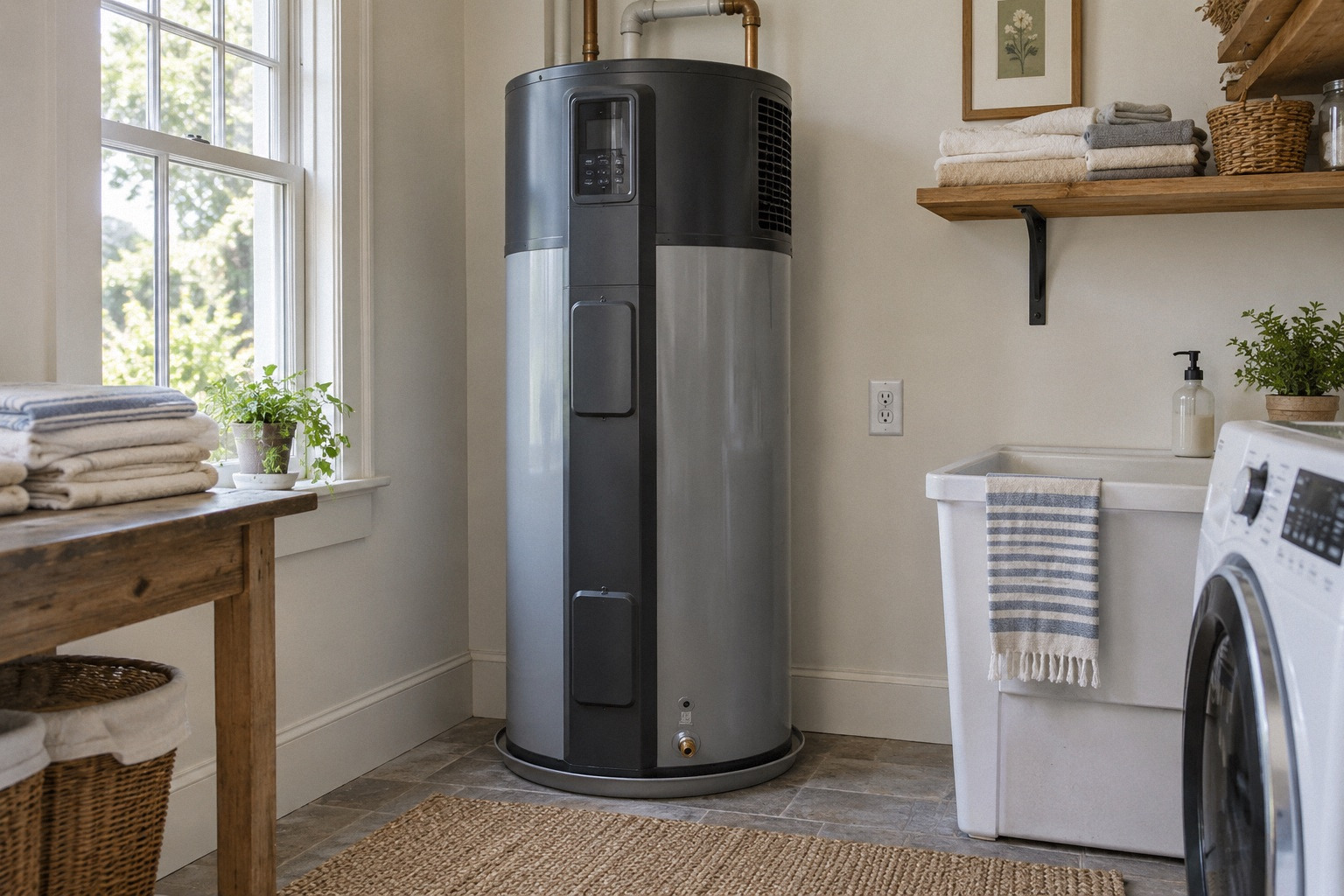
Rheem identifies one ProTerra product specifically as a ProTerra Plug-In Heat Pump Water Heater, 120V Dedicated Circuit. Its dedicated-circuit description is an important part of the product identity, not a suggestion that can be ignored because the unit has a cord.
Rheem's broader ProTerra heat pump water heater family also describes a 120 V, 15 A shared-circuit HydroBoost design. These are distinct configurations. Information about one should not be applied to another unit with a similar brand name or tank appearance.
The model number resolves the ambiguity
A contractor, retailer and homeowner may all say 120-volt heat-pump water heater while discussing different products. Record the complete model number and installation document before evaluating an existing outlet.
A product family page can introduce options, but it is not a substitute for the selected unit's instructions. If the model changes during purchasing, review the electrical plan again. A substitution that appears equivalent in tank size may have different supply or operating requirements.
An ordinary-looking receptacle is not a condition report
The nearby outlet may share a branch with other equipment, have an uncertain grounding arrangement or contain aged connections. Its face shape does not establish the complete circuit.
An electrician should identify the branch, assess its condition and compare it with the selected water heater's requirements. Avoid relying on the fact that the old gas water heater used little electricity or that a small appliance once worked from the outlet. Those uses do not prove suitability for the new equipment.
Electrical input and hot-water service must both work
A lower electrical demand can ease one constraint while changing the operating characteristics of the water-heating system. Tank storage and recovery need to match the household's pattern of use.
Consider consecutive showers, laundry, dishwashing and periods of high demand. The selected product's performance information should be evaluated for the actual household and installation environment. Choosing solely by circuit convenience can leave the owner with inadequate hot-water service even if the electrical connection is appropriate.
A hypothetical utility-room replacement
Imagine a gas water heater in a small utility room with an outlet that also serves other equipment. The owner wants to replace it with a plug-in heat-pump unit to avoid new wiring.
The first comparison is between actual models that meet the hot-water need. A dedicated-circuit model cannot simply be placed on the shared outlet because it is nearby. A shared-circuit model still needs its installation requirements and the existing branch assessed. The result may support reuse, a new circuit or a different equipment choice.
Location affects more than the cord reach
Heat-pump water heaters interact with the surrounding air and need an installation arrangement consistent with their instructions. Condensate also needs a suitable path. A location selected only because an outlet is present may be unsuitable in other respects.
The equipment professional and electrician should coordinate the final placement. Moving the tank to satisfy air or service requirements can change the electrical route. Resolving those issues together avoids installing a new receptacle at a location the water heater cannot ultimately use.
Do not confuse watts, amps and kilowatt-hours
Power in watts describes a rate of energy use. Current in amperes depends on the electrical conditions, while kilowatt-hours describe energy used over time. A lower electrical input does not by itself state the total energy consumed or the speed of hot-water recovery.
For a hypothetical illustration, a 600 W input operating for five hours uses 3 kWh. That example does not describe any particular model. It shows why an equipment rating, operating duration and household demand must be considered separately rather than comparing one number on a brochure.
Whole-home planning can reveal useful options
The Homeowner and Renter Energy Resources encourages evaluating electric equipment choices alongside the home's overall electrical system. A water heater may be one of several planned changes, together with space heating, cooking or electric vehicle (EV) charging.
A lower-demand water-heating option may help the overall plan, but the result should come from a proper assessment. Do not assume the service is adequate merely because the chosen appliance uses 120 V. Voltage alone does not establish available capacity or branch suitability.
Reusing a branch should have a clear basis
If the existing circuit is retained, the owner should understand why it is suitable for the selected model and what other loads, if any, remain on it. If a new branch is needed, the route should be coordinated with the final tank position.
The conclusion should also identify any limitations of the assessment. An inaccessible section or uncertain circuit relationship should not be silently converted into an assumption that the outlet is fine. This is particularly important in houses with mixed generations of wiring.
A practical selection sequence
Choose a hot-water solution that fits demand and location, identify its exact electrical requirements, then evaluate reuse or new wiring. Compare the complete alternatives rather than ranking products solely by whether their marketing says plug-in.
For California and other jurisdictions, local electrical requirements and the manufacturer's instructions govern installation. A suitable plug-in model can be a useful option in an older home, but its value comes from matching the whole situation, not from avoiding the electrical assessment.
Your project checklist
Questions that come up next
Are all 120 V heat-pump water heaters shared-circuit models?
No. Manufacturers offer distinct dedicated- and shared-circuit designs. Use the exact model's instructions.
Does an existing outlet eliminate electrical work automatically?
No. Its circuit, condition and compatibility with the selected product must be assessed.
Sources and further reading
- ProTerra Plug-In Heat Pump Water Heater, 120V Dedicated Circuit
- ProTerra heat pump water heater family
- Homeowner and Renter Energy Resources
Questions from homeowners
These discussions helped identify the problem. Reddit experiences are anecdotal; technical and legal statements rely on the sources above.