Define what rewire means in the estimate
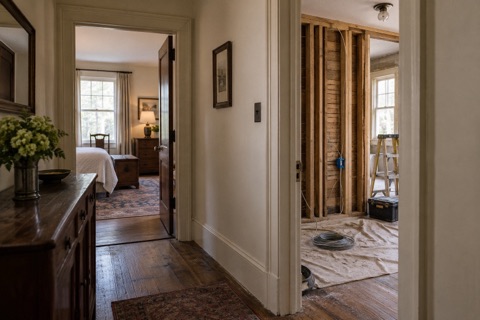
The FTC guidance on home-improvement estimates recommends clear written descriptions and explanation of significant price differences. For this project, the first question is whether the estimate covers all confirmed active legacy wiring, only selected rooms or a complete electrical redesign. Count the lights, switches and receptacles included, and identify retained areas. New recessed lighting and extra outlets may be desirable additions, but they should not be confused with the basic replacement scope. Two proposals can both say whole-house rewire while including materially different outcomes.
Access can outweigh the apparent size of the job
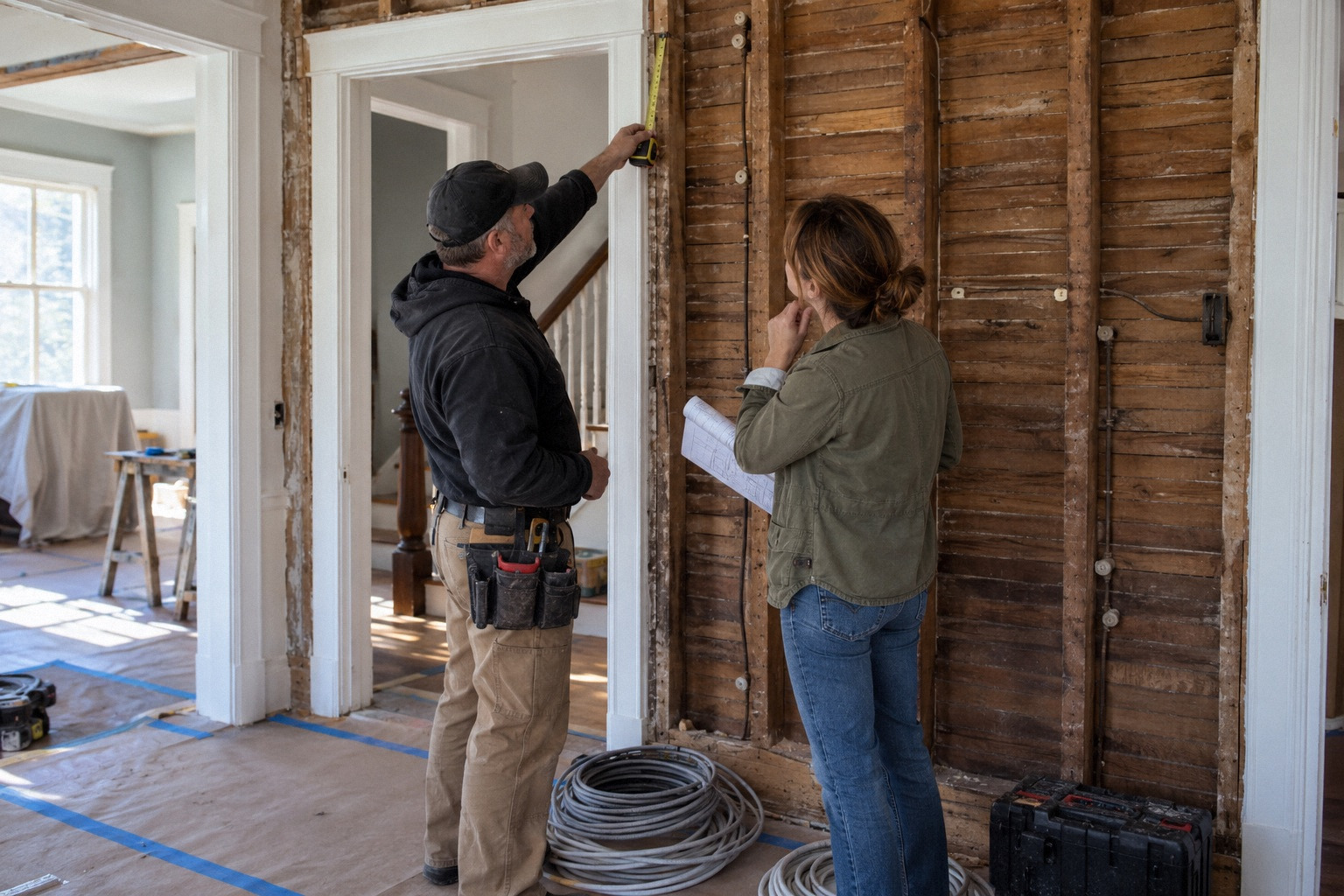
A circuit serving a few fixtures in a finished, difficult-to-access area may require more effort than several circuits accessible from an unfinished basement. This is a planning observation, not a unit-price rule. Ask the estimator which access assumptions drive the proposal and whether finish openings and restoration are included. Do not assume that every wall must be demolished, or that a promise of minimal holes has been established without a site assessment. The price should explain the expected access conditions and how discoveries that change them will be handled.
Investigation reduces one kind of uncertainty
The NFPA existing-dwelling inspection framework helps distinguish an assessment from a casual count of visible old wires. When the extent is unclear, a paid investigation may produce a better scope before competing estimates are obtained. It cannot always reveal every concealed condition without further access, but it can identify what remains uncertain. Ask whether the investigation fee is separate, what report it produces and whether it will be credited if that contractor performs the work. Do not assume a free estimate includes comprehensive circuit identification.
Panel work and finishing deserve their own lines
The CPSC guide distinguishes the panel from the branch circuits it supplies. A rewire does not automatically establish that the service must be increased; that recommendation needs its own basis. Similarly, plaster repair, texture matching and painting can be separate trades or inclusions. A budget should state whether patches will be left rough, finished or painted, and whether paint applies only to patches or entire surfaces. These distinctions explain many apparent price gaps without requiring a conclusion that one contractor is dishonest or another has found a miraculous bargain.
Build a planning range from identified risks
Use the quoted base scope as one component, then add known excluded work and specifically described allowances. Avoid an arbitrary contingency percentage presented as a universal rule. If a finished ceiling remains unassessed, ask for a plausible range or a defined investigation step. Keep optional improvements outside the required-work subtotal. The resulting budget is more useful than a single online average because it shows which decisions can change the total. Update it after findings resolve uncertainty, and compare financing costs separately if the work will be borrowed rather than paid from available funds.
Distinguish a budget allowance from a fixed inclusion
A proposal can include an allowance for an unresolved area without promising that the allowance is the final price. Ask what assumption the amount represents and what event would trigger a change. Conversely, an explicitly fixed item should not be treated as an open-ended placeholder merely because another proposal uses allowances. Put these differences in the comparison. A lower starting total with several unresolved items may expose the owner to more uncertainty than a higher total with the same work already defined.
A practical example
Hypothetical example: Consider two fictional proposals. Proposal A is $24,000 for identified branch circuits, with panel work and finish restoration excluded. Proposal B is $31,000 and includes the same circuits plus $4,000 of finish work and a $3,000 panel item. Once the inclusions are separated, the branch-circuit price is identical. These numbers are arithmetic examples, not current market rates. The owner should still confirm whether the panel item is required, whether painting is complete and whether both proposals treat an inaccessible ceiling the same way. Comparing only $24,000 with $31,000 would miss the real questions. A third proposal covering only visible basement wiring would not be comparable at all, regardless of its attractive total.
Questions to resolve before deciding
- Define the exact circuits and devices included in replacement.
- Ask which access assumptions materially affect the price.
- Separate panel or service work from branch-circuit replacement.
- Specify the finish-restoration level and excluded owner costs.
- Carry identified unknowns as explicit allowances or investigation steps.
Frequently asked questions
Can you give a reliable national price for my rewire?
Not from the wiring label or floor area alone. Current local assessment and a defined scope are needed. Online anecdotes can reveal cost categories to ask about, but their date, region, access and inclusions may differ substantially from your project.
Is the highest quote always an attempt to avoid the job?
No. It may reflect different scope, assumptions, scheduling or business costs. Ask for a clear explanation and normalize inclusions before judging. If a contractor cannot explain the proposed result, another detailed estimate is more useful than speculation about motive.
Sources and further reading
- How To Avoid a Home Improvement Scam
- NFPA 73: Electrical Inspections for Existing Dwellings
- Guide to Home Wiring Hazards
Questions from homeowners
These discussions helped identify the problem. Reddit experiences are anecdotal; technical and legal statements rely on the sources above.