Separate presence from planned disturbance
An old house may contain suspect material away from the intended electrical work. That situation differs from a route that passes directly through pipe insulation or requires opening a textured ceiling.
The first planning task is to identify the intersection between the proposed route and the material. EPA's Protect Your Family from Exposures to Asbestos explains that material in good condition that will not be disturbed may not need the same response as damaged or affected material. This is not a declaration that a particular surface is safe; it is a reason to assess the actual activity.
Photographs cannot settle composition
A photograph may help locate and describe suspect material, but it usually cannot establish whether asbestos is present. Similar-looking products can have different compositions, and later repairs can create mixtures within one area.
Avoid treating online visual guesses as a basis for cutting, drilling or removal. The relevant question is whether a trained professional needs to assess the material before the planned disturbance. That assessment should be tied to the exact components and locations involved.
Professional sampling has a defined purpose
EPA's Asbestos Frequently Asked Questions recommends trained and accredited professional sampling when suspect material is damaged or renovation would disturb it. Sampling is not simply a bag of material collected by whoever first notices it.
The purpose is to answer a specific material question while limiting unnecessary disturbance. Do not ask the electrician or homeowner to scrape an unknown wrap merely to keep the electrical schedule moving. A poorly controlled sample can create a problem before the route has even been approved.
Map suspect materials against the route
Mark pipe wraps, ceiling materials, flooring layers or other suspect components that the route may encounter. Record whether they appear intact, damaged or inaccessible without touching them.
Then compare those locations with the proposed cable path and access openings. This overlay can reveal that a small route change avoids the material, or that a seemingly minor endpoint requires specialist coordination. It also keeps the discussion focused instead of turning every old material in the house into an immediate electrical obstacle.
A hypothetical basement crossing
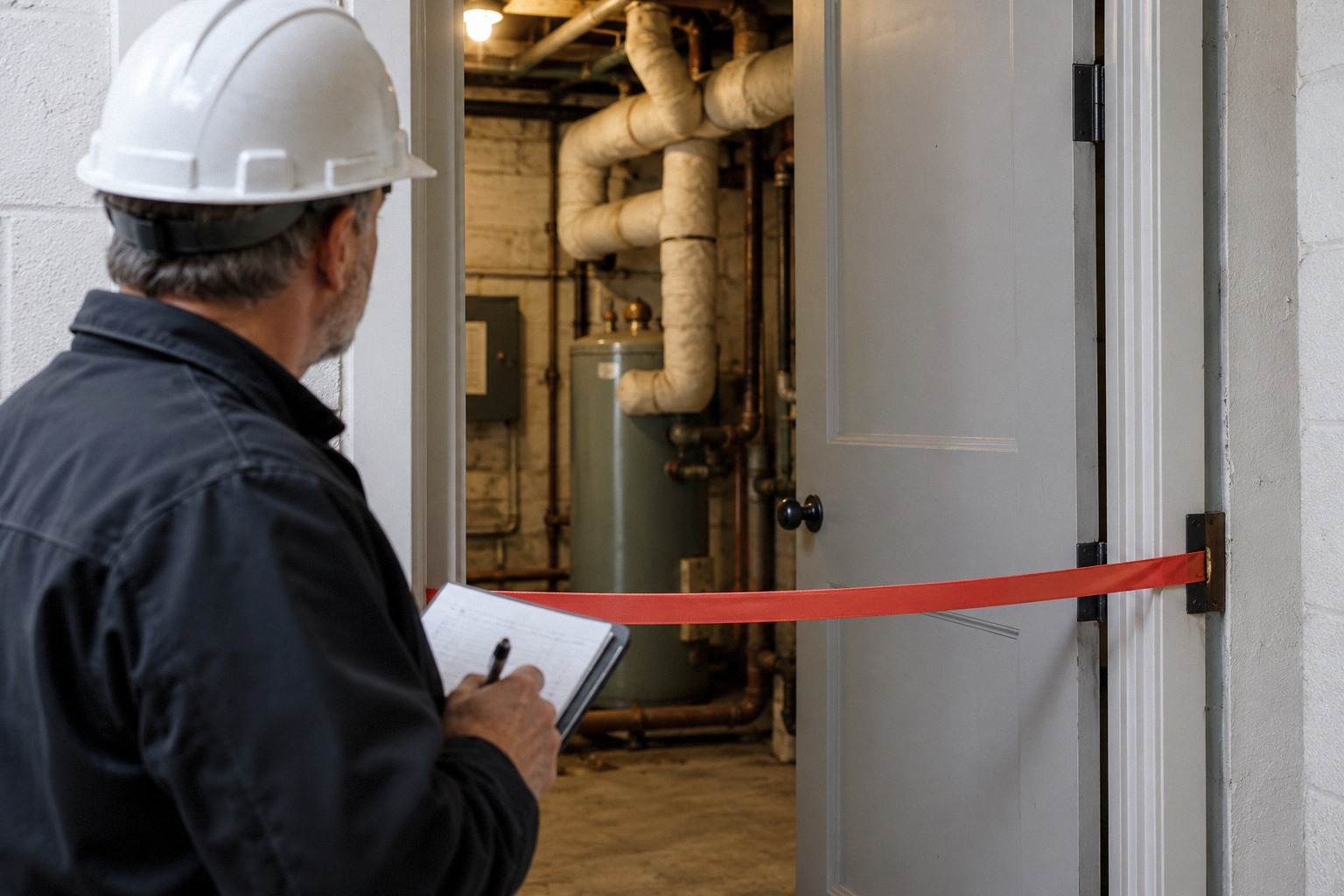
Imagine that a new circuit could cross a basement beneath old wrapped heating pipes or take a longer path along another wall. The wrap is suspect and some sections appear damaged. The owner asks whether the electrician can simply work carefully around it.
The correct comparison considers whether the proposed work would disturb the material and whether a different route genuinely avoids it. If specialist assessment or remediation is needed, that should be established before electrical activity begins nearby. The example does not diagnose the wrap or prescribe its removal; it shows how routing choices and material assessment interact.
Avoid the automatic-removal assumption
Finding suspect material does not mean every occurrence must be removed as part of the rewire. The appropriate response depends on condition, exposure potential, planned disturbance and applicable requirements.
An alternate route may be feasible. In other cases, a specialist may recommend a controlled material-management approach. The electrical design should use the resulting assessment rather than choosing a remedy from generalized internet advice. Removal, repair and leaving material undisturbed are not interchangeable decisions.
California has its own resources and requirements
The Asbestos in the Home and Workplace page links California public-health information for homes and workplaces. It is a useful starting point for understanding the state context, but it does not authorize a particular contractor to perform every type of asbestos work.
California projects can involve state worker-protection, contractor and local environmental requirements. The professionals responsible for the material work should establish those obligations. A general statement about federal homeowner rules should not be used to bypass California-specific requirements.
Keep the work sequence explicit
If material work is required, the electrical crew needs to know which area is available afterward and what limitations remain. The specialist needs to know the actual access required for the rewire, not merely that electrical work will occur somewhere nearby.
This coordination can prevent repeated disturbance. For example, clearing one access area may be insufficient if the electrician later discovers that the cable route needs to move. Sharing a realistic preferred route and fallback helps the two scopes align.
An accidental discovery needs a pause in that area
If previously unknown suspect material is encountered, stop the activity that could disturb it and obtain appropriate guidance. Do not continue simply because the opening is already started.
The next step is to reassess the route and material condition. This does not necessarily halt every unrelated part of the project. It means the affected area should not be pushed forward on a guess while independent safe work is considered separately.
What a useful assessment leaves you with
The owner should understand which materials were assessed, which locations the conclusion covers, how the planned route interacts with them and what must happen before electrical access proceeds. Keep those boundaries with the project record.
The rewire can then be designed around verified conditions instead of fear or casual reassurance. The strongest outcome is a clear access decision: avoid the material, proceed under an appropriate specialist plan or revise the route. That decision is more useful than a photograph-based claim that every old wrap is dangerous or harmless.
Your project checklist
Questions that come up next
Can a photograph confirm asbestos?
Generally no. Appearance alone is not a reliable basis for deciding whether suspect material can be disturbed.
Does suspect asbestos always require removal before rewiring?
No automatic remedy follows. Assess its condition, the planned disturbance, alternatives and applicable requirements with qualified professionals.
Sources and further reading
- Protect Your Family from Exposures to Asbestos
- Asbestos Frequently Asked Questions
- Asbestos in the Home and Workplace
Questions from homeowners
These discussions helped identify the problem. Reddit experiences are anecdotal; technical and legal statements rely on the sources above.