Why movement can change the situation
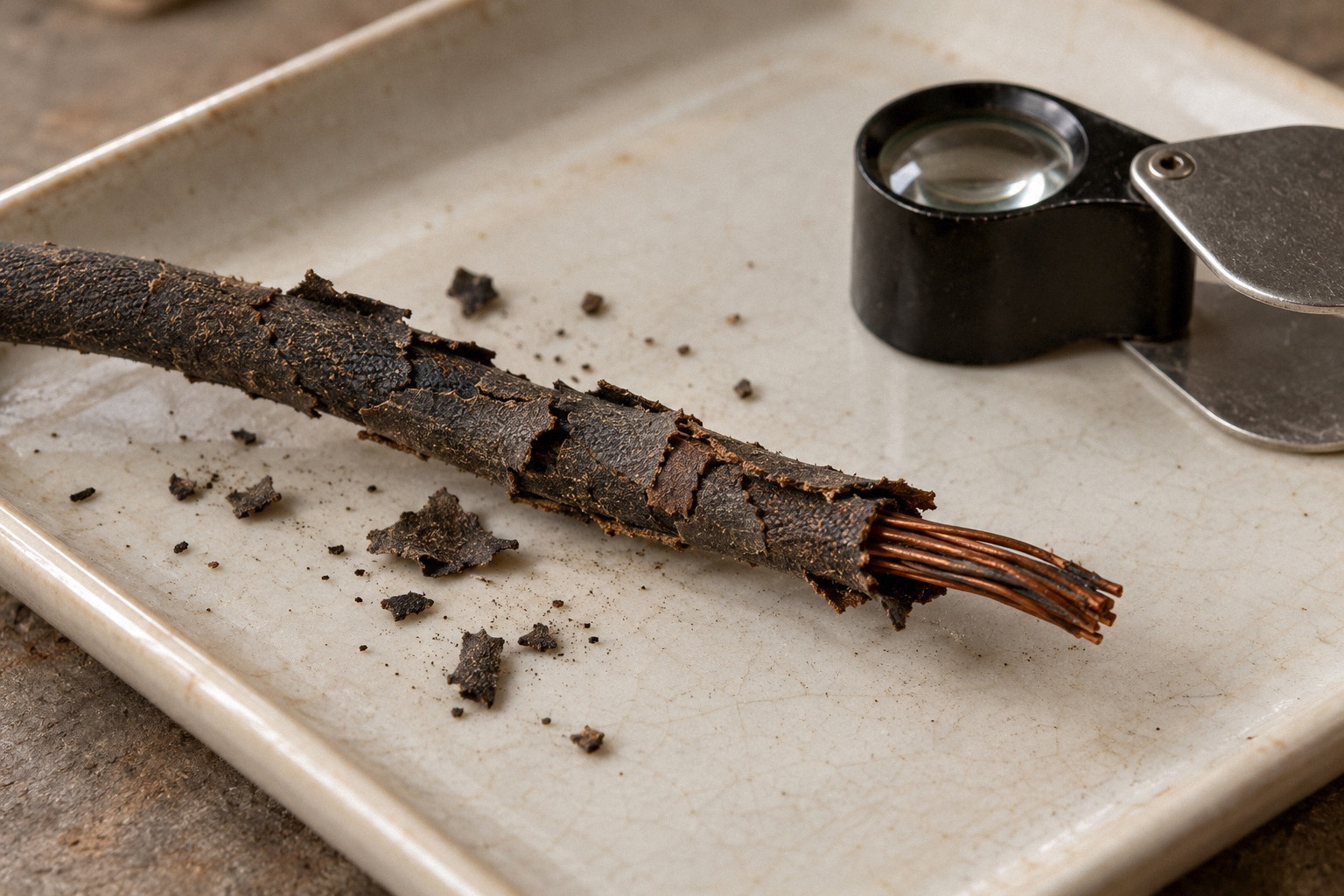
The NFPA conductor research describes how thermally aged insulation may become brittle and how cracking can create the conditions for a fault. This helps explain a common old-house surprise: a small fixture or device change reveals deterioration that was not visible before. It does not mean every old conductor will fail if touched, but it does mean that repeated bending is a poor diagnostic technique. Once deterioration is observed, the relevant question is how to make an informed repair plan, not how many more movements the material might tolerate.
Identify which material has failed
Fabric can be an outer covering, while the insulation directly around a conductor may use another material. Homeowners should not peel away layers to find out. A photograph may show loose fibers without revealing the condition underneath, or it may show exposed metal that requires prompt professional assessment. Describe exactly what happened: insulation fell away during a fixture change, for example. Include the location and any previous symptoms. That history helps the electrician distinguish existing deterioration from damage associated with the recent disturbance and decide how broadly to investigate.
One damaged point can raise a wider question
The HUD rehabilitation guide warns that visible failed insulation can indicate deterioration in concealed sections. That is a reason to investigate extent, not a license to declare every wire in the house defective from one photograph. Ask what connects the observed defect to the recommended scope. The same circuit, similar materials near hot fixtures or evidence of repeated alteration may justify broader attention. A careful report can explain confirmed damage and areas where condition remains unknown. This lets a homeowner understand why a local repair might or might not be sufficient.
Avoid turning a finish upgrade into an improvised wiring repair
Replacing a light or receptacle can appear small compared with a rewire, but the discovery of deteriorated conductors changes the job. Stop the planned cosmetic task and have the electrical issue assessed. Do not assume that a new device, tape or a smaller lamp cures damaged insulation. The electrician should determine the appropriate correction under the applicable requirements and equipment instructions. If the work will disturb finished surfaces, coordinate the necessary access and restoration after the electrical scope is understood. That order avoids repairing plaster only to reopen it for a larger correction.
Distinguish urgency from a whole-house sales pitch
The CPSC warning-sign guidance identifies damaged insulation, overheating, unusual electrical sounds and shocks as concerns for professional attention. Visible deterioration should not be deferred simply because the circuit still operates. However, a whole-house proposal should explain the additional findings that support its breadth. Ask for photographs already obtained during professional inspection, affected locations and the options considered. If a recommendation is unclear, an independent assessment can clarify it. Do not continue using or disturbing a known hazardous condition while treating the estimate comparison as the only decision that matters.
Explain what prompted a broader recommendation
A useful explanation might connect damage at several fixtures to the same retained circuit, or identify similar deterioration in multiple accessible locations. That is stronger than extrapolating from a single loose fiber. Ask whether the recommended scope is based on confirmed defects, inability to make a suitable local correction or unresolved condition elsewhere. Those reasons lead to different decisions about further assessment. A homeowner does not need to judge the repair technique to request the evidence behind the proposed extent.
A practical example
Hypothetical example: An owner plans to replace a dining-room light. The person doing the work discovers insulation breaking away near the fixture and stops. The electrician finds local deterioration and evaluates whether the affected circuit has similar problems elsewhere. The owner receives a proposal that separates the immediate correction from further investigation of inaccessible sections. The practical value is the explanation: which damage is confirmed, why a wider scope may be needed and what evidence remains unavailable. A general statement that all cloth wire is dangerous would not provide that clarity. Nor would reconnecting the new light and assuming lower lamp wattage resolves the damaged insulation. The project has changed from a fixture refresh to an electrical condition problem.
Questions to resolve before deciding
- Stop disturbing conductors when insulation cracks, crumbles or exposes metal.
- Record the location and what activity revealed the deterioration.
- Ask what findings support the recommended repair or replacement extent.
- Keep confirmed defects separate from areas that remain inaccessible.
- Coordinate finish work only after the electrical correction scope is understood.
Frequently asked questions
Is tape a reliable homeowner solution for crumbling insulation?
A surface covering is not a substitute for identifying the affected material, the extent of damage and an appropriate approved repair. Leave the assessment and correction to an electrician. Do not keep manipulating brittle conductors to make an improvised repair fit.
Does a working light mean the insulation is still adequate?
No. Normal operation does not establish insulation condition. A circuit can supply a load while having deterioration that creates a hazard under different conditions or after movement. Visible damage warrants assessment regardless of whether the switch still turns the light on.
Sources and further reading
- Electrical conductor research, historical findings
- Residential Rehabilitation Inspection Guide, electrical chapter
- Guide to Home Wiring Hazards
Questions from homeowners
These discussions helped identify the problem. Reddit experiences are anecdotal; technical and legal statements rely on the sources above.