Ask what the requested signature means
A homeowner may be asked to provide property-owner authorization, apply for a permit or sign an owner-builder declaration. Those are not necessarily the same action. Ask to see the form and read the statements beside the signature. Determine whether you are confirming ownership, accepting management responsibility or representing that you will personally perform work. Do not rely on a verbal summary that the form is only paperwork.
If the electrician says the arrangement is standard, ask for the official local instructions supporting it. A common practice is not automatically the correct arrangement for your project. The permit office can explain who may apply and how a licensed contractor should be identified. Give staff the actual proposed relationship rather than asking a hypothetical question that omits the paid contractor.
Understand California's owner-builder responsibilities
CSLB describes owner-builder duties that include permits, supervision, scheduling and payment of subcontractors. Owner-Builder Responsibilities The details matter because an owner who only intends to hire a complete rewiring service may not want to act as the project's construction manager. Ask which duties the contractor is proposing to handle and which remain with you under the application.
Hiring labor can also create obligations beyond the electrical work itself. Do not assume that paying someone as a helper or calling a worker independent resolves that issue. If the arrangement includes people outside a properly structured licensed subcontract, obtain appropriate advice about employment and insurance responsibilities. This is a reason to understand the role, not a claim that every owner-managed project is improper.
Match the permit with the contracting business
Identify the entity on the contract and the business expected to perform the electrical work. A person employed by a licensed company may be offering separate side work rather than contracting through that company. Ask which arrangement is being proposed. The employer's license or insurance should not be assumed to cover an unrelated private job.
California's contract guidance calls for clear identification of the contractor and permit responsibility. What is a Contract? Make those details agree across the proposal, contract and application. If the electrician plans to bring a crew or another company, ask how those parties are documented. The owner should not discover at inspection that the permit describes a different project arrangement from the one actually on site.
Speak with the permit authority directly
Explain who owns the property, who will supervise and who will perform the work. Ask whether the proposed applicant is eligible, what declarations apply and how inspection responsibilities are assigned. San José's electrical guidance notes that the permit signer's role carries responsibility and directs applicants to owner-builder information. Electrical Projects Other cities and states may use different eligibility rules or forms.
Request clarification before signing rather than expecting an inspector to repair the administrative arrangement later. If work has already begun, state that honestly and ask how to correct the record. Do not backdate a declaration or claim personal work you did not do. A truthful application protects the accuracy of the project record even when the proper process is inconvenient.
Hypothetical conversation before signing
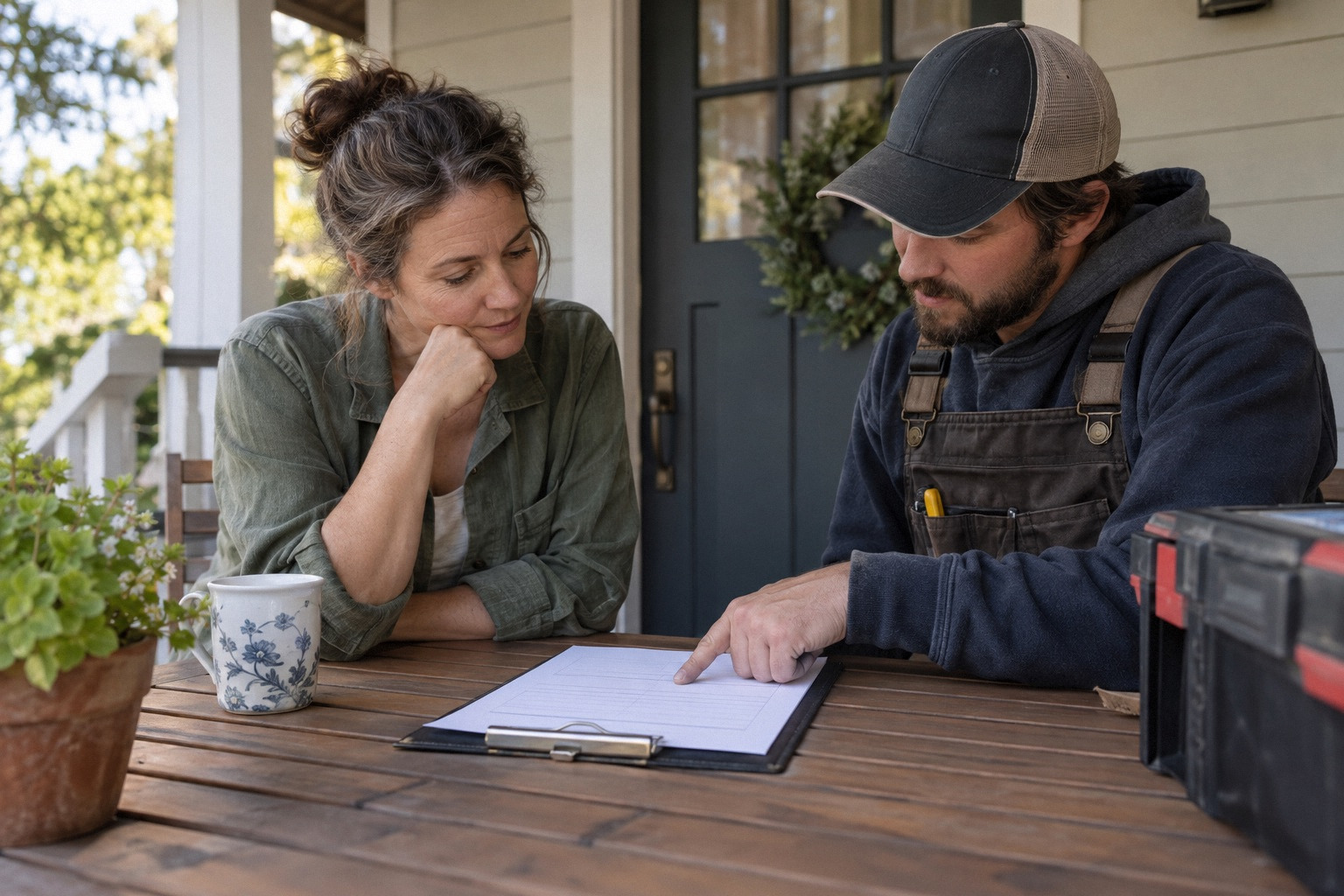
Imagine an electrician proposes that the owner obtain an owner-builder permit because the electrician is working outside the company that normally employs them. The owner asks whether the work will be contracted through a separately licensed business and who will supervise, insure and respond to corrections. The answers may reveal a legitimate business structure or a gap that needs resolution before proceeding.
Use a short decision record:
- Requested action: identify the exact form, applicant role and declarations being requested.
- Actual work arrangement: name the contracting business and the people or companies expected to perform the work.
- Management: state who selects and schedules trades and who controls changes.
- Approval duties: identify who obtains the permit, requests inspections and completes corrections.
- Official guidance: record the permit office's instructions for that arrangement.
- Unresolved questions: list any licensing, employment, insurance or contract issue requiring clarification.
This does not decide legal responsibility by itself. It helps prevent a signature from being given on the basis of an incomplete explanation.
Choose a role you can actually carry out
Some owners intentionally manage projects and hire properly structured trades. Others want a contractor to deliver a defined result with approvals and closeout included. Either way, the agreement and permit should reflect the chosen role. If you lack the time or expertise to coordinate the project, do not accept that role solely because it makes a contractor's paperwork easier.
After the arrangement is settled, keep a copy of the submitted application and issued permit. Verify that the scope and listed parties are accurate. Track inspections and changes through the agreed contact. A clear permit role is not a substitute for technical competence, but an inaccurate role can create avoidable confusion when the project encounters a correction, a delay or a dispute.
Your project checklist
Questions that come up next
Is an owner permit always wrong when a contractor is involved?
No. Eligibility and responsibilities depend on the jurisdiction and actual arrangement. Ask the authority and make truthful declarations.
Does my electrician employer license cover their side job?
Do not assume that. Identify the business making your contract and verify the scope of its authority and coverage.
Sources and further reading
Questions from homeowners
These discussions helped identify the problem. Reddit experiences are anecdotal; technical and legal statements rely on the sources above.