Distinguish a model code from adopted requirements
The National Electrical Code is a model code used through adoption processes. A homeowner's project is governed by the applicable legal framework, not simply by the most recent book available for purchase. State and local processes can affect the edition, amendments and administration. Other requirements may concern building work, energy standards, equipment instructions or utility service. An answer to one technical question does not settle the entire project.
For California, the Building Standards Commission provides the current Title 24 editions and related updates. California Building Standards Code Use that official starting point to identify the relevant documents. Avoid relying on an old contractor blog that still describes an earlier statewide cycle as current. Also avoid assuming that a page's recent publication date means every referenced technical rule has been reviewed for your exact situation.
Confirm the jurisdiction and permit timing
Ask which agency has building authority over the address and which code edition applies to the proposed permit. If an application was submitted before a code transition, ask how the agency treats that application and any later revisions. Do not decide the answer from the construction start date alone. The relevant administrative rule may depend on application completeness, issuance, expiration or the nature of a revision.
Write down the permit identifier and the agency's answer. If the project is still in planning, state the expected application date and ask what would change if submission slips. This helps the electrician prepare a consistent scope and avoids a late disagreement based on an assumption made months earlier. Treat informal planning guidance separately from formal approval of submitted plans.
Look for local amendments without overgeneralizing
California's Building Standards Commission maintains information on local amendments and their filing requirements. Local Amendments to Building Standards - Ordinances That does not mean every neighboring city has identical amendments or that every local difference is found in a single short checklist. Ask the relevant department where its adopted code and administrative requirements are published. Keep the local source with the statewide reference.
Do not transfer a useful San José example to a house in an incorporated San Mateo County city. Likewise, a county page may address unincorporated areas rather than every address with that county in its mailing information. The practical first question is always who has authority here. Only then is it useful to compare the actual requirements affecting the proposed work.
Define the work being evaluated
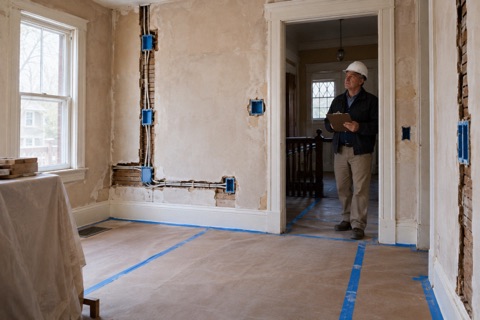
A full rewire, replacement of selected circuits, a panel project and a room renovation may raise different scope questions. Explain which existing installations will remain and what the contractor proposes to alter. Ask how the applicable requirements affect that boundary. Do not assume that touching one device automatically requires every unrelated feature in the house to be brought to the newest standard, or that existing status exempts all altered work.
San José's electrical project guidance makes the installer responsible for the adopted requirements and identifies scope limits for permits. Electrical Projects Its checklist is helpful within that city but does not replace the full code or a project review. For an owner, the useful output is a clear explanation of the approved scope and any required related work, not a self-written electrical design assembled from selected paragraphs.
Hypothetical code-basis record
Imagine a rewire planned in late 2025 but delayed into 2026. The owner has an old estimate referencing an earlier code cycle. Before construction, the contractor and permit office confirm the status of the application, the applicable edition and whether revised documents are needed. The owner updates the project record instead of assuming either the estimate date or the calendar year alone determines the answer.
A short record can include:
- Address and agency: the confirmed authority for the property, with its official contact or page.
- Permit status: planning, application, issued permit or revision, with relevant identifiers and dates.
- Code basis: the edition and local amendments identified by the responsible authority or approved documents.
- Scope boundary: replaced work, retained work and related alterations included in the review.
- Open interpretations: questions awaiting a written answer, with the person responsible for resolving them.
- Revision effect: what must be rechecked if the work expands, the permit expires or the application changes.
This is an administrative summary. It should point to the controlling records rather than pretending to replace them.
Use code questions to improve the project conversation
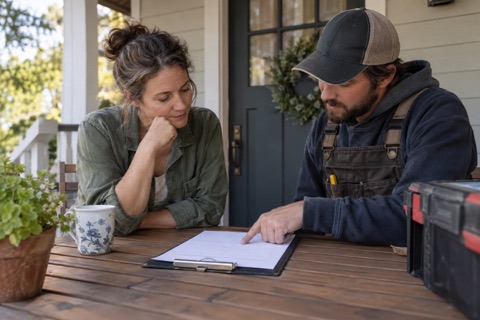
When a contractor says something is required, ask which requirement and which part of the project triggers it. The question should invite explanation, not challenge the professional to debate fragments from a forum. If two qualified parties disagree, request the authority's interpretation through its appropriate process. Keep the written question focused on the actual condition and proposed work.
At closeout, retain the approved scope and relevant revision records. Future work may be reviewed under a different code cycle, so a dated record helps explain what was authorized at the time. The owner does not need to memorize the code; the useful responsibility is to ensure that the project uses a consistent, current and locally applicable basis.
Your project checklist
Questions that come up next
Does the newest NEC automatically apply everywhere?
No. Confirm adoption, amendments and the permit circumstances for the actual jurisdiction.
Does a 2025 estimate determine the code for work started in 2026?
Not by itself. Ask the agency about the application and permit status and any effect of revisions or delay.
Sources and further reading
- California Building Standards Code
- Local Amendments to Building Standards - Ordinances
- Electrical Projects
Questions from homeowners
These discussions helped identify the problem. Reddit experiences are anecdotal; technical and legal statements rely on the sources above.