Why insulation changes the decision
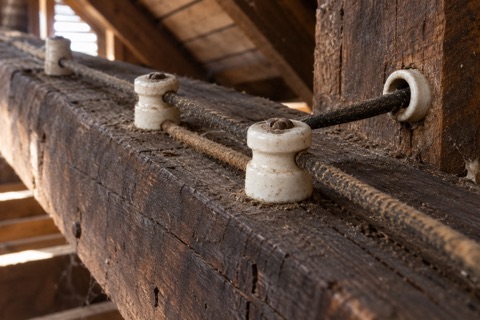
Knob-and-tube installations use separated conductors and historically open spaces around the wiring. The DOE Building America energy-renovation guidance warns that adding insulation can create overheating concerns and recommends replacing active knob-and-tube before the insulation project. This is a planning prerequisite, not a homeowner instruction to move insulation away from wires. Old insulation can conceal conductors and other hazards, so investigating the area may require qualified trades. Explain the intended insulation project to the electrician rather than requesting a generic statement that the house has never had electrical problems.
Identify the affected area and the unresolved paths
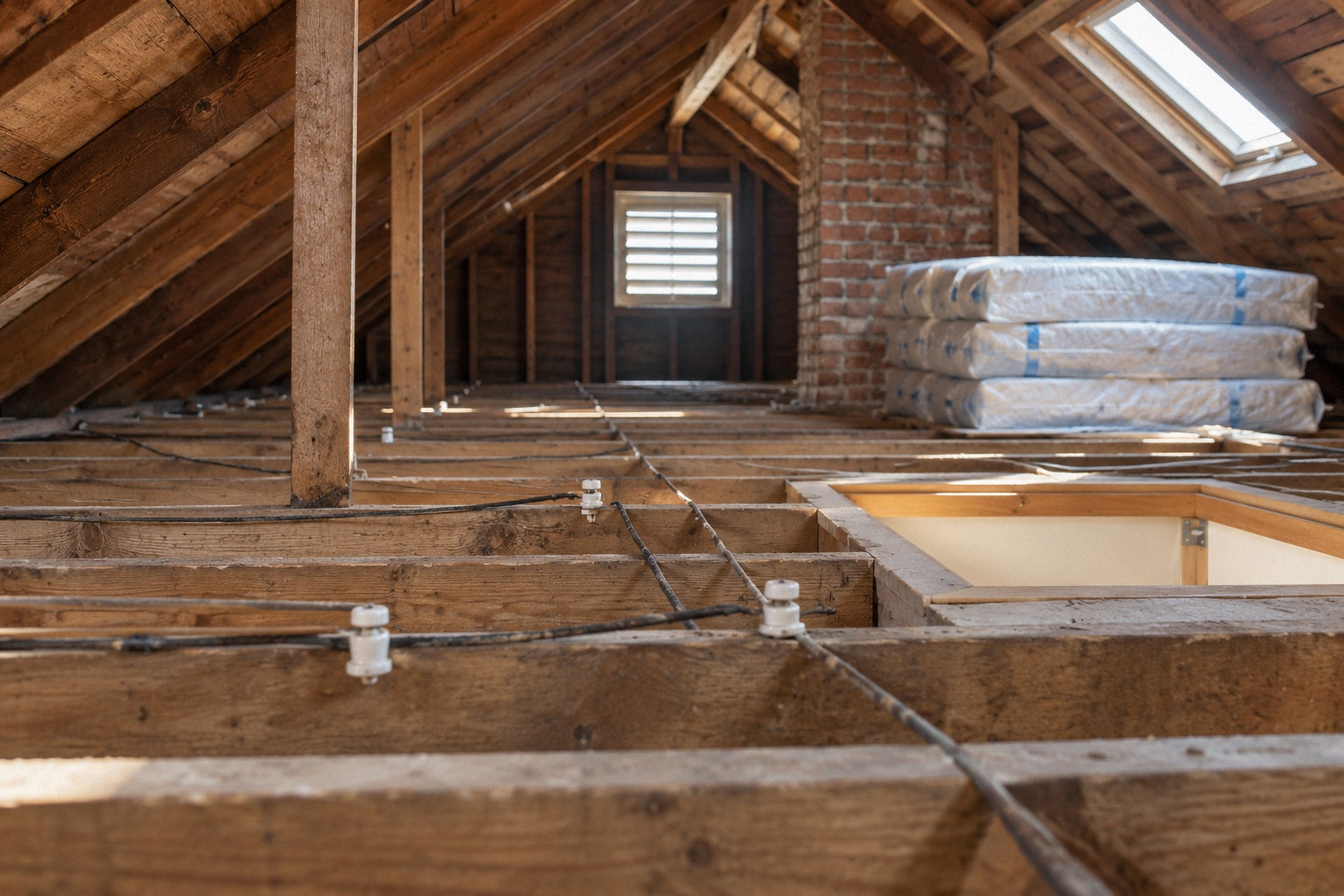
An attic can contain inactive remnants beside active sections or wiring entering concealed walls. The insulation footprint may be larger than the area visible from the access opening. Ask what was actually assessed and whether conductors entering knee walls or finished ceiling areas remain uncertain. A report about one accessible corner cannot establish that every area to be insulated is clear. The insulation provider also needs a usable description of the electrical findings. A verbal statement passed through several people is less reliable than a written scope tied to the locations where work will occur.
Read standards in their proper context
The Standard Work Specifications page on knob-and-tube isolation specifies clearance and marking for live wiring in its weatherization context. It should not be presented as universal permission to install insulation around any existing system. A program specification, a federal educational guide and the electrical rules enforced by the local authority may have different roles. If someone proposes retaining active wiring, ask the responsible professionals to identify the applicable provision, required assessment and any approval needed. Do not select the most permissive sentence from an unrelated jurisdiction or an old online guide.
Keep California decisions property-specific
California homeowners should confirm the applicable requirements with the local building department and the qualified contractors handling the project. An answer from another state, or an anecdote about a neighbor’s insulation job, may not apply. If a rebate program is involved, its documentation rules add another condition rather than replacing electrical requirements. The electrical and insulation proposals should agree about what must happen first. If one assumes complete replacement while the other assumes a limited isolation measure, the discrepancy should be resolved before materials or crews are scheduled.
Document the handoff between trades
The 2026 BayREN EASE Home announcement describes licensed-electrician documentation of inactivity for its project-linked support. Regardless of program participation, the practical lesson is to provide evidence the next trade can use. Record the assessed area, any remediation and the conclusion about remaining wiring. If limitations remain, state them. An invoice that says electrical work complete may be too vague to establish that the insulation area is ready. Ask the insulation provider to confirm that the documentation satisfies its prerequisites before the project resumes.
A clean attic photograph is not a clearance record
Removing old insulation can make an attic look ready while leaving active conductors entering walls or passing through less visible spaces. Ask whether the assessment covers the entire planned insulation area and its relevant transitions. The electrical record should travel with the insulation scope, including any areas excluded from the work. If the project changes to include another space, revisit that boundary. A clearance for the original footprint should not silently expand when the insulation crew is asked to do additional work.
A practical example
Hypothetical example: A homeowner plans to add attic insulation after an energy assessment. Several old conductors are visible, and a prior electrician once said that most were dead. That phrase does not identify which ones remain active or whether they cross the proposed work area. The homeowner arranges a scoped electrical assessment and shares the insulation plan. The professionals determine the required remediation and documentation under the applicable local and program conditions. Only after that result is established does the insulation provider schedule the work. This avoids a costly sequence in which insulation is installed first, then disturbed again to investigate wiring. It also avoids treating a weatherization clearance detail as permission to ignore an unresolved active circuit.
Questions to resolve before deciding
- Identify the complete insulation footprint and inaccessible adjoining spaces.
- Have active status and relevant condition assessed by an electrician.
- Resolve conflicts between DOE guidance, program specifications and local requirements.
- Make the electrical and insulation proposals agree about prerequisites.
- Obtain usable completion documentation before the insulation crew begins.
Frequently asked questions
Can I cover old wiring if a tester did not respond?
Do not treat a homeowner test or a single observation as proof that the relevant wiring is inactive. Arrange professional assessment with a scope matching the insulation area. Unresolved conductors should remain unresolved in the record until properly investigated.
Does a three-inch weatherization clearance apply everywhere?
No. The cited specification has its own context and does not replace the code or approval process applicable to a particular property. Have the responsible professionals establish which requirements govern the proposed work and document any accepted method before proceeding.
Sources and further reading
- DOE Building America: Energy Renovations
- Knob and Tube Wiring - Isolation
- Knob-and-tube rebates help Bay Area homes with EASE Home upgrades
Questions from homeowners
These discussions helped identify the problem. Reddit experiences are anecdotal; technical and legal statements rely on the sources above.