Past performance answers a narrow question
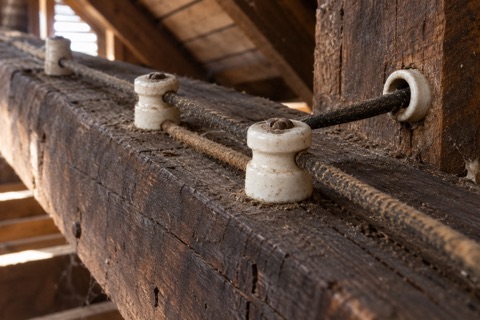
A house standing for a century is not evidence that every electrical component has remained unchanged or that no near misses occurred. Owners may have used fewer appliances, replaced equipment or avoided a troublesome outlet without recording why. The visible system may also have been altered by multiple people. None of this proves a hidden defect, but it limits what can reasonably be concluded from the statement that there have never been problems. Record known symptoms and changes, then ask what present observations can establish rather than debating whether age itself is reassuring or alarming.
Conditions can change without a rewire
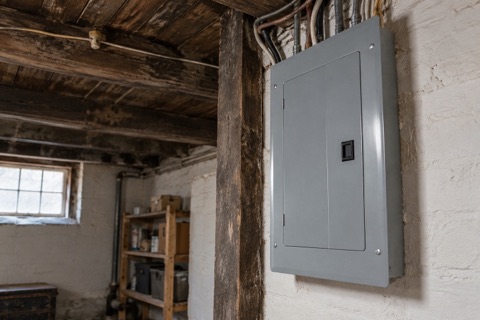
The Indiana preservation guidance discusses increased electrical demands and aged insulating materials in historic buildings. Adding appliances, enclosing a space or insulating a previously open cavity can change the context in which older wiring operates. A household that once used a room only for reading may now use it as an office with additional equipment. The correct response is an assessment of the relevant circuits and planned use. It is not to assume that a larger panel or a device adapter makes the existing branch wiring suitable for every new demand.
Hidden condition remains hidden until assessed
The NFPA conductor research explains mechanisms involving thermal aging and brittle insulation. These mechanisms are reasons for investigation, not a prediction that a particular house will experience a fire. An accessible section in good condition may coexist with a damaged connection elsewhere. Conversely, a worrying visual impression may need clarification of the actual material and electrical status. Ask the professional to explain the basis for conclusions and limitations. A statement that no defects were seen in accessible areas is useful evidence at that scope, but should not be expanded into certainty about every concealed location.
No symptoms and warning signs lead to different actions
The CPSC guide lists symptoms such as repeated tripping, abnormal heat, electrical odors and shocks. Those observations deserve attention even if the wiring previously worked for decades. A house without symptoms may still warrant assessment because of its age, uncertain history or planned changes. Keep these situations separate. Emergency signs require an immediate response appropriate to the situation; a general concern about historical wiring requires a defined inspection. Neither panic nor indefinite postponement helps the owner understand what work is actually necessary.
Turn reassurance into a documented maintenance decision
If an electrician concludes that an immediate whole-house replacement is not the current recommendation, ask what was assessed, what remains unknown and what changes would trigger reconsideration. An insurer may still have separate underwriting requirements. An insulation project may have its own prerequisites. Preserve the report and revisit the decision when planned use or access changes. This is more robust than repeating that the house has always been fine. The goal is a supported decision for current conditions, with a clear record of why it was made and where its boundaries lie.
Separate unchanged use from an unchanged installation
Even if a household has not added appliances, later repairs may have changed connections or protective equipment. Conversely, the wiring may be unchanged while room use has increased. Make two short histories: known work and known use. Include events such as a room becoming an office or an attic being finished. The distinction gives an assessor better context than the single statement that nothing has changed. It also identifies which records or people might clarify the uncertainty without disturbing the wiring.
A practical example
Hypothetical example: A family has used the upstairs bedrooms without noticeable electrical trouble for twenty years. They now plan an attic insulation project and a home office. Their history is useful, but it does not answer whether older wiring remains active in the insulation area or whether the office loads are suitable for the circuits. A professional assessment can address those specific questions and identify any observed defects. The project may reveal that some wiring is inactive, that other sections need replacement or that further investigation is necessary. The absence of previous symptoms does not settle any of those outcomes. It simply belongs in the background information alongside renovation records, known circuit behavior and the proposed changes.
Questions to resolve before deciding
- Document known changes in appliances, room use and past electrical work.
- Report symptoms even if they are intermittent or long familiar.
- Ask what present observations support the assessment.
- Confirm the conditions attached to any decision to defer replacement.
- Revisit the assessment before insulation, major renovation or added electrical demand.
Frequently asked questions
Is old knob-and-tube guaranteed to cause a fire?
No one can responsibly predict that outcome from the wiring label alone. Condition, alterations and operating circumstances matter. The appropriate response is an assessment of the actual installation and any observed defects, not a claim that every old system will inevitably fail.
Can an electrician assessment override an insurer’s requirements?
An assessment can provide evidence for underwriting, but the insurer makes its own coverage decision under the policy and applicable rules. Ask what documentation it will accept and whether any repair condition remains. Technical findings and insurance eligibility are related but separate decisions.
Sources and further reading
Questions from homeowners
These discussions helped identify the problem. Reddit experiences are anecdotal; technical and legal statements rely on the sources above.