Why electrical work belongs in the discussion
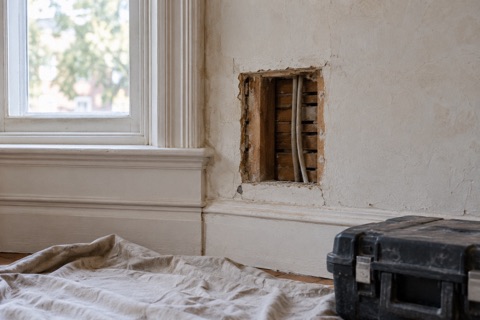
A rewire may disturb paint through wall openings, trim removal, device-box changes and subsequent patching. Even if the cable installation itself is the main project, the route can create a painted-surface renovation activity.
EPA's Renovation, Repair and Painting Program: Contractors explains the program's application to firms and individuals who disturb painted surfaces in covered buildings. The practical implication is that the electrical access plan and the finish-disturbance plan need to be considered together. Calling the job electrical work does not make the painted surfaces irrelevant.
What the six-square-foot figure actually means
EPA describes a minor repair and maintenance exception involving six square feet or less of interior painted surface per room, with other conditions. Window replacement and demolition of painted surfaces are not covered by that exception merely because their area is small.
The number is therefore not a simple allowance to cut any opening below a chosen size. EPA's How EPA interprets minor repair and maintenance explains that the nature of the activity and prohibited or restricted practices also matter. A qualified firm should determine applicability for the actual work rather than applying the threshold as a slogan.
Count the activity, not just the final hole
The final visible opening may not represent all the paint disturbed while making it, removing adjacent material or completing related work. Multiple openings in one room also need to be considered in context.
Before the route is finalized, describe the planned access locations and the other renovation work expected in that room. This gives the responsible professional the information needed to evaluate coverage. A series of small tasks should not be treated as unrelated merely because different people perform them.
Testing and assumptions need a recognized basis
An owner may have an old home-test result, a recollection of repainting or a belief that new topcoats cover everything. Those observations do not automatically establish the regulatory status of each component to be disturbed.
EPA's contractor guidance describes recognized approaches for determining that particular components are free of lead-based paint under the program. The assessment must match the actual surfaces involved. A result for one wall or trim piece should not be generalized to every room without an appropriate basis.
A hypothetical bedroom rewire
Imagine a bedroom where the electrical plan requires several small wall openings and removal of a short painted trim section. The owner also plans window work and repainting during the same renovation.
The project should be evaluated as its actual set of activities. It would be misleading to focus only on the area of each electrical opening while ignoring the other disturbance and the character of the work. The example illustrates coordination, not a calculation of an exemption for a real project.
Route selection can reduce disturbance
A route through an accessible service area may avoid cutting some painted finishes. A different device location or a listed surface method may also change the disturbance pattern. These alternatives can be compared before work starts.
However, reduced disturbance is not the same as no lead-related planning. Attachments, transitions and trim work can still affect painted material. The useful question is which route achieves the electrical objective with the least unnecessary disturbance while meeting all applicable requirements.
Occupancy affects the practical arrangement
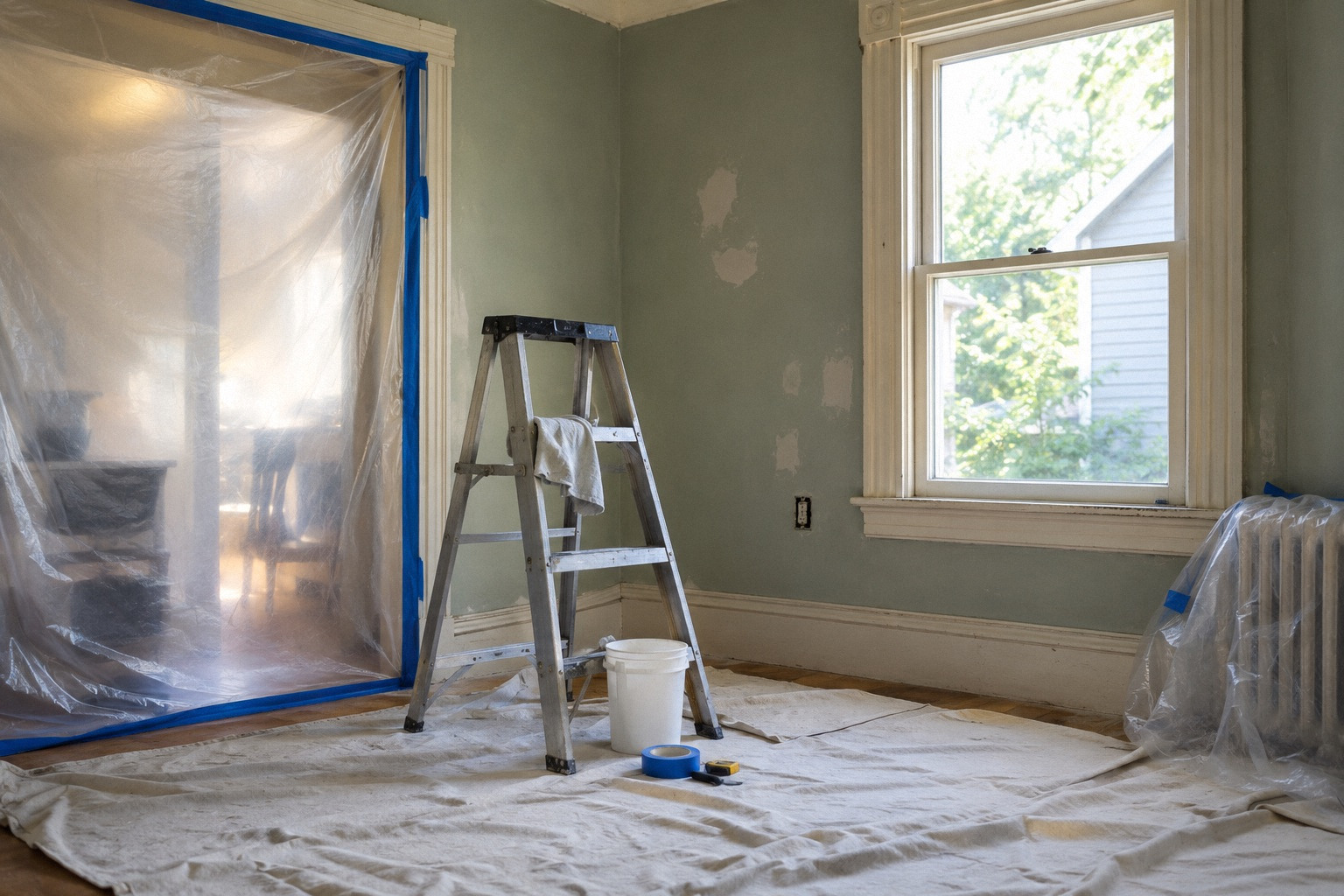
A rewire in an occupied house needs a plan for separating the work area from everyday activities. Children, pets, belongings and normal room circulation should be considered before the contractor arrives.
EPA's Steps to Lead Safe Renovation, Repair and Painting describes the sequence of lead-safe renovation planning and work practices. The homeowner does not need to improvise containment or cleanup methods from a short article. The practical responsibility is to understand the agreed work-area arrangement and avoid treating a temporarily restricted room as ordinary living space.
Electrical and finish trades need the same boundary
The electrician may make openings and another trade may patch or paint them. If each assumes the other is handling the painted-surface requirements, a gap can develop between the planned protections and the actual work.
Clarify which firm is responsible for each disturbance activity and how the work area is handed over. This is a coordination issue rather than a request for a generic paperwork package. The objective is that the protection plan follows the work through completion instead of ending when the cable is installed.
Avoid reassurance based on visible cleanliness alone
A room that looks tidy after work has not necessarily met every applicable cleanup or verification requirement. The relevant process should follow the governing program and the contractor's responsibilities.
Similarly, a vacuum sitting on site does not establish that the equipment or method is appropriate. Ask for a plain-language description of how the covered work will be completed and checked. Do not substitute an improvised homeowner cleanup for a required professional process.
California distinctions and a useful outcome
Federal RRP requirements are only part of the applicable framework. California projects may also involve state and local worker-protection or other requirements, depending on the activity. The responsible professionals should determine which rules govern the actual scope.
The desired outcome is a route and disturbance plan with clear responsibilities, appropriate assessment and an understood work-area arrangement. That allows the rewire to proceed with fewer surprises and avoids the false choice between ignoring lead concerns and assuming every old painted surface requires the same response.
Your project checklist
Questions that come up next
Is every electrical hole smaller than six square feet exempt?
No. The minor-work exception has other conditions, including limits involving demolition and work practices. Evaluate the actual activity and related disturbance.
Does repainting prove the old paint is lead-free?
No. New coatings do not establish the composition of older layers or the status of components that will be disturbed.
Sources and further reading
- Renovation, Repair and Painting Program: Contractors
- How EPA interprets minor repair and maintenance
- Steps to Lead Safe Renovation, Repair and Painting
Questions from homeowners
These discussions helped identify the problem. Reddit experiences are anecdotal; technical and legal statements rely on the sources above.