Start with the proposed route
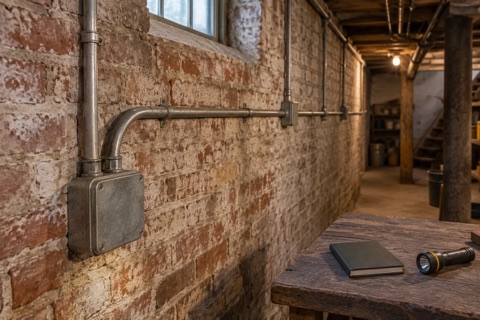
A circuit concealed inside a dry bedroom wall presents a different design problem from one crossing an exposed basement, passing through a crowded service area or entering an outdoor enclosure. The room name alone does not resolve those differences. A basement might have both reliably dry interior cavities and areas affected by water entry. A route drawn as one line on a floor plan may therefore need to be divided into several segments.
Ask for the choice to be explained segment by segment: from the panel to the first accessible area, through the building, and into the device boxes. This reveals whether the recommendation solves a real constraint. It also prevents an attractive material comparison from distracting everyone from a poor route that damages valuable finishes or leaves awkward connections.
What the NM-B specification actually says
Southwire specifies its NM-B cable for dry locations, with 90°C individual-conductor insulation but ampacity limited to the 60°C conductor basis. Its 600 V rating is another, separate property. None of these numbers identifies the breaker size for an unspecified installation. The distinction is between insulation capability, cable application and complete circuit design. See Romex Brand SIMpull Copper Type NM-B Cable.
For the homeowner, the useful question is whether the proposed NM-B location and installation method fit that boundary. Cable support, protection from damage, connections and local requirements remain part of the design. Putting cable inside another enclosure does not erase its own restrictions. Nor does replacing an older cable with a thicker-looking one establish that the circuit is correctly protected.
MC is a family of constructions
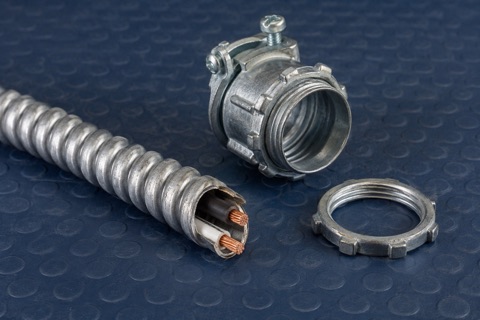
Metal-clad cable should not be treated as a single interchangeable product. Grounding arrangements, jacket construction and permitted applications depend on the actual listed assembly. A modern product specification cannot be projected backward onto an unidentified cable already in the wall. Southwire's Southwire MC Cable Products Installation Guide guide explains the importance of matching the product and installation method.
This is especially relevant where an owner calls every old spiral jacket “BX” and every new spiral jacket “MC.” Familiar trade shorthand may conceal an important difference. The electrician needs enough information to choose compatible connectors and boxes and to establish the intended grounding path. A metal appearance or a voltage reading on the jacket is insufficient evidence by itself.
| Decision | NM-B example | MC example |
|---|---|---|
| Environment | Cited Southwire product: dry locations | Use the actual metal-clad product listing; metal armor alone does not establish a wet-location rating |
| Grounding | The complete cable and terminations must provide the intended path | Some constructions include a grounding conductor; listed armor-based systems have specific requirements |
| Endpoint | Cable entry and box arrangement must suit the cable | Armor, connectors and box arrangement must match the cable system |
Compare the whole installation
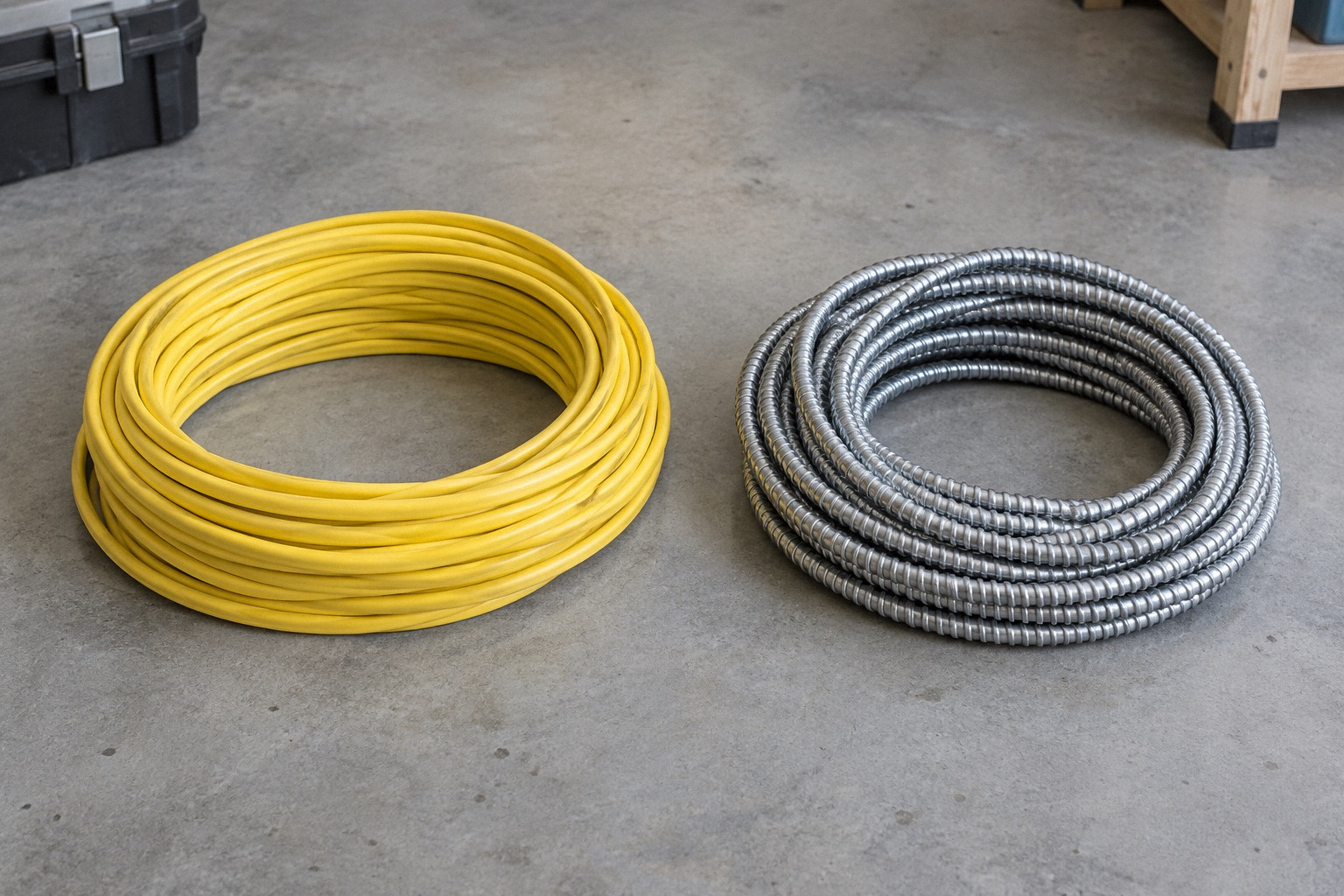
A useful comparison includes more than the price of a coil. Think about how each option reaches the existing box, what happens at a transition, whether the route remains accessible and how the final installation will be protected during future storage or repairs. The most economical cable can produce a cumbersome installation if it requires avoidable rebuilding around every endpoint.
Likewise, a more substantial-looking cable may not justify a difficult route through original decoration when another approved method can use a service space. Preservation guidance from the Standards for Treatment of Historic Properties: Preservation and Rehabilitation recommends minimizing damage to significant building fabric. That is a route-planning principle, not a preference for one cable material.
A hypothetical basement comparison
Imagine a dining-room circuit that can reach its destination through either a dry wall cavity or an exposed basement corridor used for storage. The wall route has few visible changes but an uncertain obstruction near the outlet. The basement route is easier to trace but places wiring near shelves, plumbing repairs and future equipment.
A sensible evaluation records those differences before selecting the wiring method. If limited investigation confirms a clear wall path, concealed cable may be attractive. If the wall route is obstructed, an appropriately designed exposed method may be more practical. The example does not establish that either cable is automatically acceptable; it shows why the answer changes when the route changes.
Questions that make competing recommendations comparable
Ask each electrician to identify the exact cable family, the conditions it is intended to encounter and the point where it transitions to another method. Ask how grounding will be provided and how the selected boxes and connectors fit the assembly. These questions turn “we always use this” into an explanation that can be checked.
Also ask whether the recommendation assumes opening a particular wall, removing trim or using a cavity that has not yet been investigated. A material decision based on unverified access should remain conditional. Recording that uncertainty is more useful than demanding a universal winner between NM-B and MC.
Existing wiring needs a separate decision
Choosing new cable does not settle the fate of every existing branch. A mixed installation may include a serviceable modern circuit, a legacy circuit needing replacement and an uncertain section that cannot yet be traced. Those conditions should not disappear into a single material label.
Keep the new-route decision separate from the evidence needed to retain old wiring. A professional assessment can define each boundary without assuming that everything old is identical. This also helps avoid a misleading result in which the visible basement receives modern cable while the unexamined portion above remains the source of the original problem.
California and other local distinctions
The governing installation rules come from the code adopted for the project and any applicable amendments. A national manufacturer page does not establish that every jurisdiction accepts every wiring method in every building type. California projects therefore need a local applicability check even when the cable itself carries a familiar listing.
The final recommendation should connect a specific product, a specific route and a specific set of conditions. If any of those changes during the work, the cable decision may need to change with it. That is a normal consequence of uncovering an older building, and a much stronger basis for selection than jacket preference alone.
Your project checklist
Questions that come up next
Is MC always safer than NM-B?
No blanket ranking resolves the design. Product suitability, installation quality, protection, connections and route conditions determine whether a method is appropriate.
Can an electrician mix wiring methods?
A design may use different approved methods at deliberate transitions. The boxes, fittings, grounding and location rules must be handled as a complete system.
Sources and further reading
- Romex Brand SIMpull Copper Type NM-B Cable
- Southwire MC Cable Products Installation Guide
- Standards for Treatment of Historic Properties: Preservation and Rehabilitation
Questions from homeowners
These discussions helped identify the problem. Reddit experiences are anecdotal; technical and legal statements rely on the sources above.