Observe the symptom without inventing the diagnosis
The CPSC wiring-hazard guide identifies several warning signs across the electrical system. A flicker, odor or trip can involve different causes, so a homeowner should report the observation rather than decide which hidden wire failed. Note the location, time, appliances in use and whether other rooms were affected. Describe a sound or smell in ordinary language. Useful history helps a professional narrow the investigation, while a confident but unsupported diagnosis can distract from the actual problem. Do not repeatedly operate a suspect device just to produce a demonstration.
Treat shocks and heat as information, not inconveniences
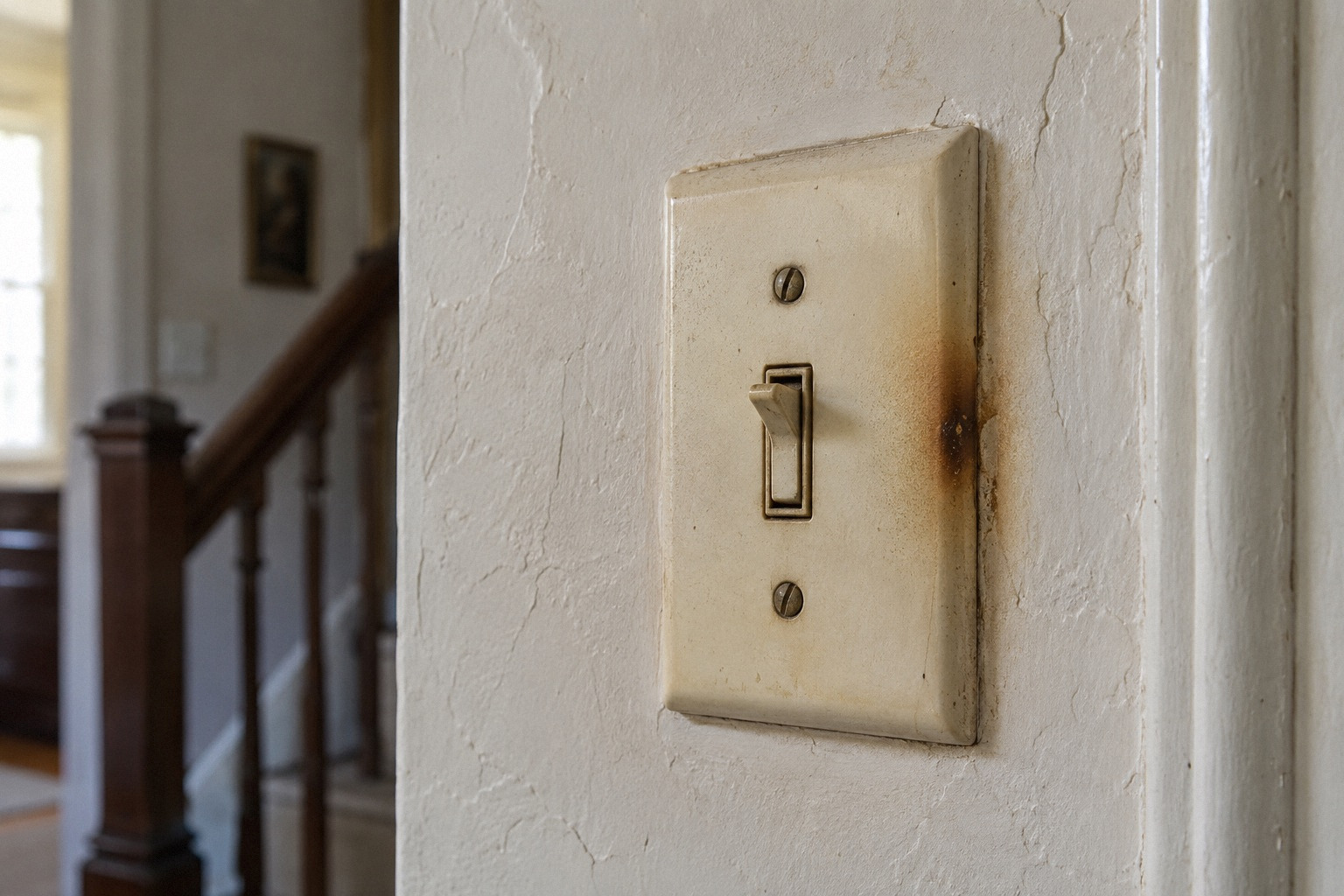
A mild tingle from a device or appliance is still a meaningful warning. Likewise, a discolored faceplate or an outlet that becomes unusually hot should not be dismissed because the appliance continues to run. Avoid touching the equipment again to see whether the symptom persists. Keep people away and obtain appropriate assistance. If there is active smoke or fire, prioritize leaving and emergency response rather than collecting photographs or finding a breaker. A practical safety response comes before determining the age, brand or historical wiring method involved.
Repeated resetting can hide an unresolved condition
A breaker that trips is reporting a condition that needs to be understood. Repeatedly resetting it without resolving the cause is not a troubleshooting plan. Do not install a larger protective device or replace it with one selected simply to stop nuisance trips. The electrician must assess the circuit and connected equipment. Record whether the event occurred with one appliance, several loads or apparently little use, but do not intentionally recreate the combination. In a mixed old-and-new system, the investigation may reveal more than one issue; the triggering symptom does not define the full repair scope.
Separate urgent defects from broader modernization
The HUD rehabilitation guide distinguishes inspection of wiring condition from the presence of a particular system. An urgent local defect may need immediate correction while a broader rewire is evaluated separately. Conversely, a seemingly small symptom can reveal deterioration that supports a larger scope. Ask for the reasoning connecting findings to recommendations. The NFPA existing-dwelling inspection overview provides context for a wider assessment when needed. Homeowners should understand which action addresses the present concern and which work improves or replaces the remaining system.
Keep a useful incident record
Write down the observation after you are safe: room, device, approximate time and any unusual circumstances. Keep existing photographs or video obtained without approaching hazards. Record prior work and whether similar symptoms occurred elsewhere. Share the information with the electrician before the visit so the required scope and access can be discussed. Do not allow a normal-looking moment to erase an intermittent problem. A symptom that disappears can still be relevant, and the report should reflect what could and could not be reproduced or verified during the assessment.
Describe the pattern across locations
Tell the electrician whether a symptom affects one lamp, several devices in one area or much of the house. Note whether it coincides with weather or a particular appliance, without intentionally recreating the event. These distinctions can influence the appropriate investigation and whether another party, such as the utility, needs to be involved. They do not let a homeowner diagnose the source safely. A short, accurate pattern description is useful; repeated experimentation that exposes people to the symptom is not.
A practical example
Hypothetical example: An owner notices a bedroom circuit trip twice during a week and assumes the breaker is old. The room has new-looking outlets, so the owner expects a quick component replacement. Instead of continuing to reset it or selecting a larger breaker, the owner stops using the affected setup and arranges an assessment. The electrician reviews the appliances and circuit, checks relevant accessible conditions and determines the actual cause. The assessment may also identify older wiring that needs separate attention. The key is not the eventual diagnosis, which this example cannot predict. It is the decision to treat the symptom as unresolved and to distinguish the immediate correction from any broader recommendation about the house.
Questions to resolve before deciding
- Prioritize evacuation and emergency services when smoke, fire or immediate danger is present.
- Do not touch suspect equipment or expose conductors to investigate.
- Record the symptom and circumstances without deliberately reproducing it.
- Avoid repeated resets or larger protective devices as a workaround.
- Ask which recommended work addresses the symptom and which addresses wider findings.
Frequently asked questions
Does flickering prove that the house needs a full rewire?
No. Flickering has multiple possible causes and requires an appropriate assessment. Report its pattern and circumstances. A full rewire recommendation should be supported by findings about the installation, not by the symptom alone or the age of the house.
What if the problem stops before the electrician arrives?
Keep the appointment or follow the professional’s advice about the appropriate assessment. Intermittent conditions may not appear during a short visit. Your record of affected equipment, timing and prior events remains useful, and the report should be clear about any unresolved uncertainty.
Sources and further reading
- Guide to Home Wiring Hazards
- Residential Rehabilitation Inspection Guide, electrical chapter
- NFPA 73: Electrical Inspections for Existing Dwellings
Questions from homeowners
These discussions helped identify the problem. Reddit experiences are anecdotal; technical and legal statements rely on the sources above.