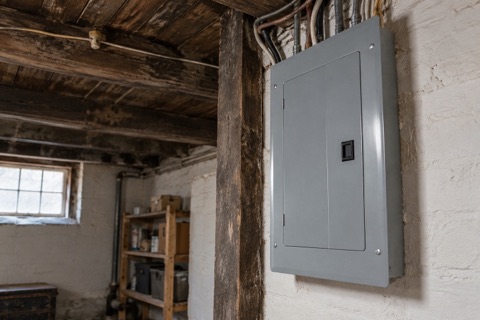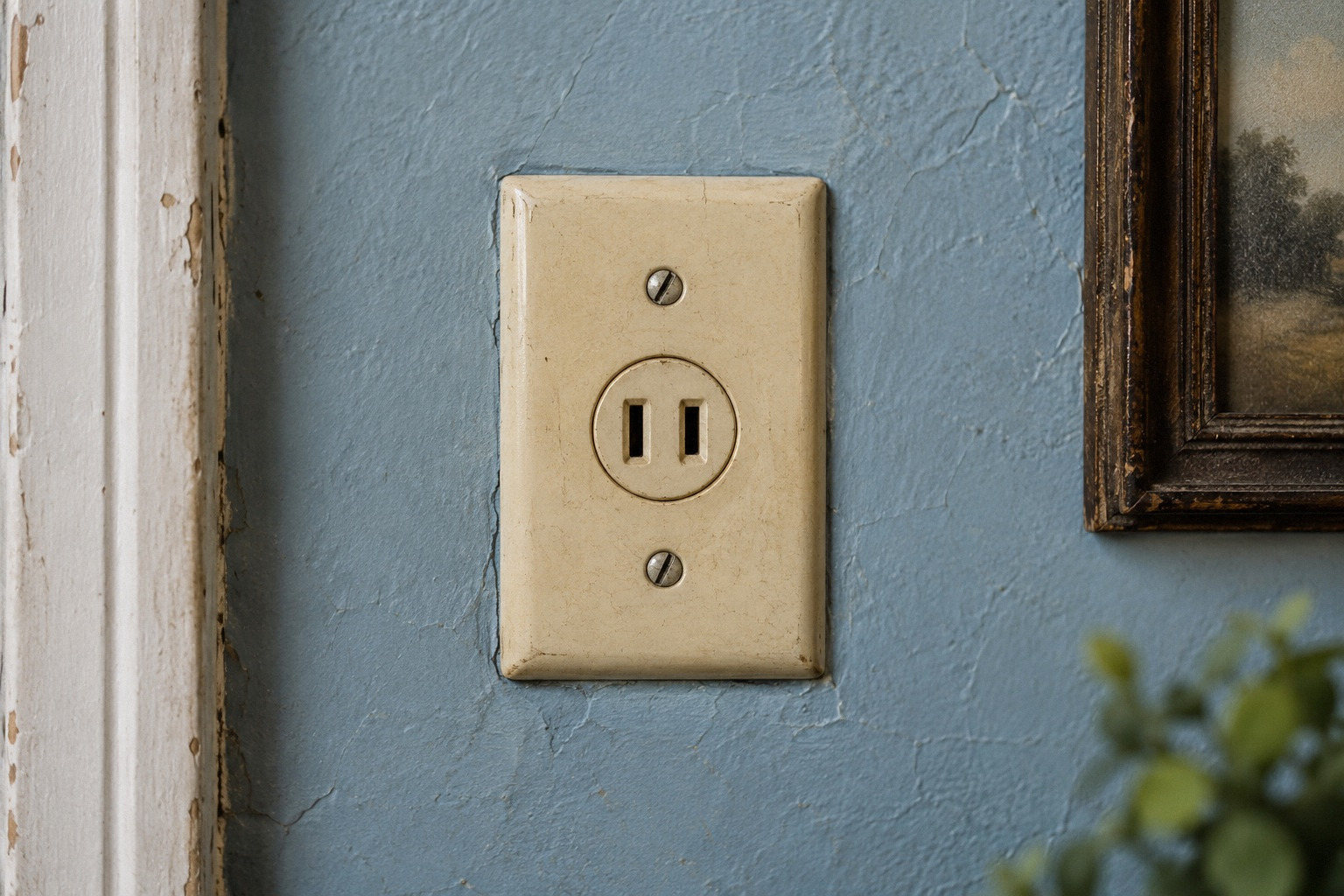
The face of the device is only one component
An outlet can be newer than the wiring serving it. Renovations often replace visible devices while retaining conductors behind the wall. Conversely, an old two-prong device may remain in a circuit whose construction differs from what a visitor expects. Looking at a room full of modern outlets therefore cannot establish a complete rewire, and counting two-prong outlets cannot measure the percentage of knob-and-tube. Use the device style as a prompt for investigation. Ask what was established about the wiring and grounding, rather than treating the faceplate as a record of the entire circuit.
Wiring method and grounding need different evidence
The HUD inspection guide identifies several types of wiring, including older cloth-covered nonmetallic cable and armored systems. Those constructions cannot be distinguished from the prong openings alone. Whether an effective equipment-grounding path exists also requires assessment beyond appearance. A professional report should make clear which question each finding answers. If an inspector notes ungrounded receptacles, do not rewrite the observation as confirmed knob-and-tube throughout the room. If knob-and-tube is identified elsewhere, do not assume every outlet in the building is supplied by it.
A protective device does not rewrite the circuit history
Ground-fault protection and an equipment-grounding connection serve different purposes. A GFCI device does not transform the underlying wiring into a new grounded cable system. Installation options, labeling and suitability require the applicable code and the electrician’s assessment; this article does not prescribe a retrofit. For the homeowner, the practical point is that seeing a test button is not proof of a complete rewire. Ask what protection was added, what wiring remains and what limitations apply to the intended equipment or the insurer’s requirements.
Avoid overinterpreting a quick test
The CPSC guide explains the importance of grounding and shock protection in the context of household electrical safety. A simple indicator or a single accessible reading should not be treated as a whole-system investigation. Testing must be selected and interpreted appropriately, especially when old and newer work coexist. The NFPA 73 overview describes a broader inspection framework for existing dwellings. If the decision is whether to buy a house or replace its wiring, request an assessment proportionate to that decision instead of relying on a quick device demonstration.
Translate the finding into a usable scope
The report should identify affected locations and the condition found. The next scope may involve correcting device arrangements, addressing grounding or replacing deteriorated wiring, but those outcomes should be based on actual findings. Ask whether lighting circuits were included, since modernized receptacles can coexist with old ceiling wiring. When answering an insurance application, use the electrician’s terminology and disclose uncertainty rather than selecting whichever label seems more favorable. Precise descriptions prevent an ungrounded-outlet finding from either overstating a whole-house problem or understating a real legacy-wiring issue.
Keep the equipment-use question explicit
If the concern arose because a particular appliance has a three-prong plug, tell the electrician what equipment you intend to use and where. The answer should address that use as well as the wiring identification. An outlet that physically accepts a plug is not proof that the full arrangement is appropriate. Do not remove a grounding pin or rely on an adapter as a substitute for the assessment. Keep any equipment-specific limitations in the final record so the household does not later mistake a device change for an unrestricted upgrade.
A practical example
Hypothetical example: A buyer counts eight two-prong outlets and assumes that half the house still uses knob-and-tube. A later electrical assessment identifies more than one wiring method, along with newer devices on some retained circuits. The count was useful for locating questions but not for estimating the amount of legacy wiring. The electrician’s report distinguishes wiring type, grounding findings and observed defects by area. The buyer can then ask for prices addressing those findings and provide an accurate report to the insurer. This avoids paying for a proposal based solely on outlet appearance while also avoiding the opposite mistake of trusting three-prong devices as proof that the entire circuit is modern and properly grounded.
Questions to resolve before deciding
- Keep outlet style, grounding status and wiring method as separate observations.
- Ask whether new devices were installed on retained older conductors.
- Include lighting and switches in questions about a room’s electrical history.
- Do not use adapters or improvised connections to resolve a grounding concern.
- Base insurance statements and repair scopes on documented findings.
Frequently asked questions
Are all two-prong outlets connected to knob-and-tube?
No. Several older wiring methods may lack an equipment-grounding conductor. The outlet openings do not identify the construction behind the wall. An electrician must assess the actual wiring and grounding arrangement before a system-wide conclusion is justified.
Does a GFCI prove that the circuit was rewired?
No. Ground-fault protection may have been added while older conductors remained. Ask what work was performed, whether any required labeling is present and what limitations remain. The appropriate installation and use depend on the actual circuit and applicable requirements.
Sources and further reading
- Residential Rehabilitation Inspection Guide, electrical chapter
- Guide to Home Wiring Hazards
- NFPA 73: Electrical Inspections for Existing Dwellings
Questions from homeowners
These discussions helped identify the problem. Reddit experiences are anecdotal; technical and legal statements rely on the sources above.